




















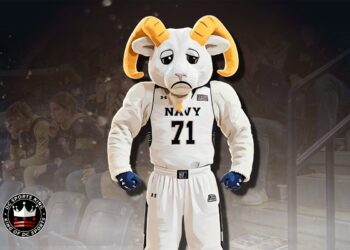








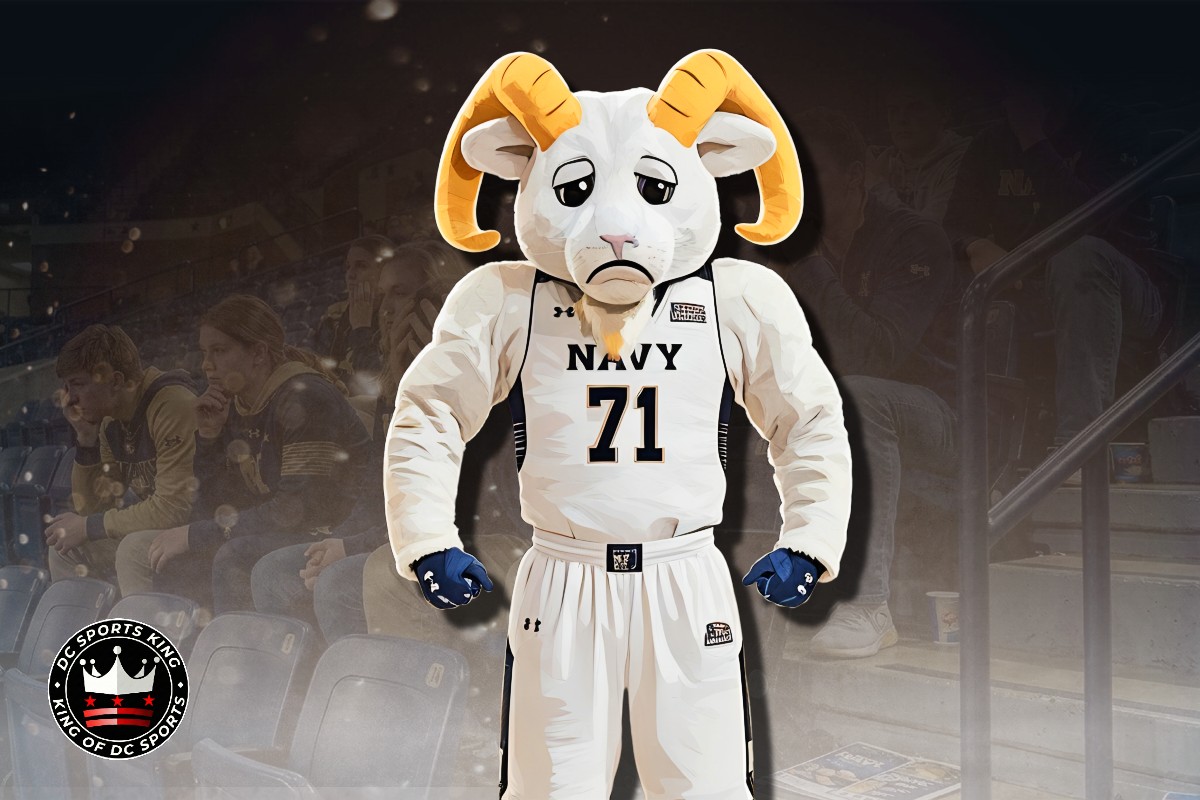
If you are a Navy basketball fan waking up today, the sting of Sunday’s game is likely still fresh. Looking objectively at the play-by-play data and the context of the 2025-26 season, the heartbreak is completely justified: Navy Nation has every right to be devastated.
Navy’s 73-72 loss to the Boston University Terriers in the Patriot League semifinals on Sunday wasn’t just a standard defeat. It was a crushing, controversial gut-punch that abruptly ended one of the program’s most historic runs in forty years.
Here is a straightforward breakdown of how a dream season fell apart in less than four seconds, and why the controversy surrounding the final buzzer will be talked about all off-season.
The Setup: A Historic Campaign Derailed
Before we get to the final sequence, we have to acknowledge what Navy achieved this year. The Midshipmen were a complete powerhouse in the Patriot League.
- Dominant Record: They rolled into the tournament with a 26-6 overall record and a near-flawless 17-1 conference mark.
- Head-to-Head: Navy had already swept Boston University in the regular season.
- The Stakes: As the No. 1 seed, they were the clear favorites to win the conference tournament and secure an automatic bid to March Madness.
Despite trailing at halftime and struggling from beyond the arc (shooting just 15.4% from three-point range compared to BU’s blistering 45.8%), Navy’s grit kept them alive. Senior center Aidan Kehoe put up a monster double-double with 26 points and 12 rebounds, keeping the Midshipmen within striking distance.
The Final 3.6 Seconds
Basketball is a game of microscopic margins, and the final minute of this semifinal matchup was total chaos.
With the game tied at 70, Navy’s Austin Benigni—the Patriot League Player of the Year—drove the length of the floor and scored a clutch, go-ahead layup, leaving just 3.6 seconds on the clock. At 72-70, Alumni Hall roared. The Midshipmen were a single defensive stop away from the championship game.
Then came the inbound. Boston University freshman guard Chance Gladden caught the pass, sprinted up the floor, and launched a massive 30-to-40-foot heave from just over mid-court.
The shot found the bottom of the net at the buzzer. Boston 73, Navy 72.
The Clock Controversy
A buzzer-beater is always painful for the losing side, but this one came with a heavy dose of controversy.
Video analysis and stopwatch timing by fans and sports analysts immediately highlighted a glaring issue: the game clock did not start when Gladden touched the inbound pass. Estimates suggest that approximately 1.5 to 1.6 seconds elapsed from the moment Gladden grabbed the ball until the clock operator began timing the play, giving Boston University extra time that should not have been available.
Officials reviewed the sequence and acknowledged the clock error. Given the fact that they cannot perfectly reverse time and replay a live-action sequence with a corrected clock, the shot stood. The officials determined that 0.6 seconds remained, allowing the Navy for a failed desperation heave.
In theory, had the clock started immediately upon Gladden’s touch, he would have had significantly less time to get into shooting range and set up for his shot. The extra 1.5 to 1.6 seconds allowed him a more controlled attempt. Without the delay, he likely would have had to rush a tougher, less balanced shot or not get the shot off before time expired.
The only certainty is that the scorer’s table error directly impacted the final outcome.
The Aftermath
Boston University now advances to face Lehigh in the Patriot League championship game, riding the momentum of a miraculous upset. Meanwhile, the Midshipmen are left out of the Big Dance. Despite their 26 wins and regular-season dominance, the Midshipmen will likely have to settle for a secondary postseason tournament.
It is a harsh reality of mid-major college basketball: a dominant regular season means very little if you stumble in March, even if that stumble is assisted by a timing error.