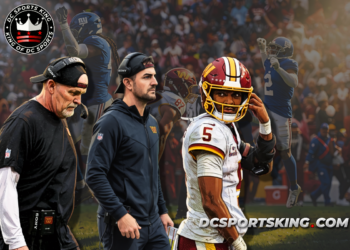
































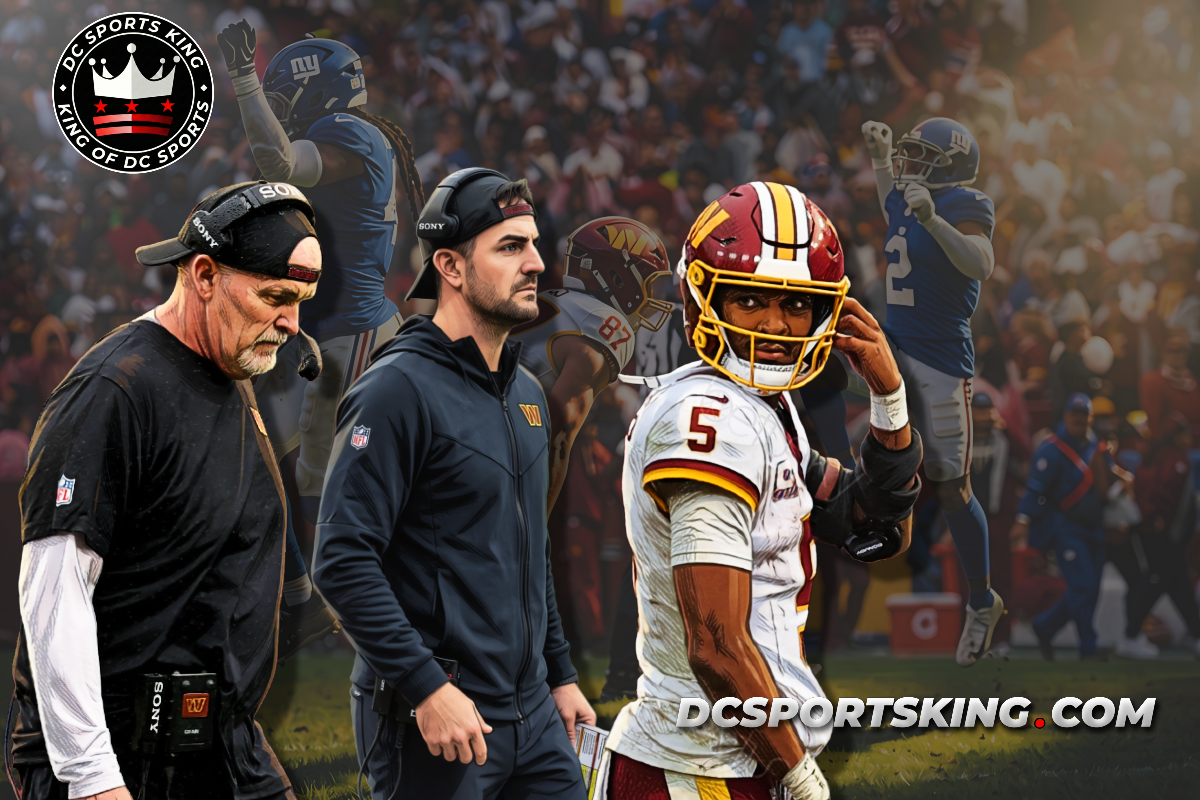
The final moments of Sunday’s 27-27 tie against the New York Giants offered a surreal, agonizing tableau. Giants defenders jumped into the air in ecstatic celebration, Commanders players slumped in disbelief, and head coach Dan Quinn violently smashed his headset into the turf.
It was a slow-motion car crash on national television, ending with the clock hitting zero while the offense casually held the ball without a timeout. When a team bumbles a “next-score-wins” scenario that catastrophically, the natural instinct is to find a single scapegoat. But a collapse of this magnitude takes a village. The blame for this overtime fiasco doesn’t rest on one pair of shoulders—it is a comprehensive, top-down failure shared equally by Dan Quinn, David Blough, and Jayden Daniels.
Dan Quinn: The Architect of the Timeout Deficit
Quinn’s headset-smashing sideline fury might have mirrored every fan’s frustration, but the head coach ultimately has no one to blame but himself. The panic in those final seconds stemmed entirely from a lack of timeouts—a direct result of Quinn burning them early. Situational management is a head coach’s foundational duty. By failing to preserve clock-stopping equity for the most critical juncture of a tight game, Quinn stripped his offense of its safety net. His post-game admission that the failure starts at the top is accurate; you cannot orchestrate a two-minute drill without the tools to manage it, and Quinn left the cupboard bare.
David Blough: The Communication Breakdown
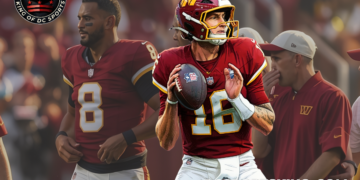
While Quinn mismanaged the game’s broader resources, offensive coordinator David Blough is responsible for the immediate operational awareness on the turf. As the primary communicator in the quarterback’s ear, Blough’s job is to outline the situation’s parameters clearly. Rookie play-caller or not, Blough had to ensure the huddle focused solely on the running clock and zero timeouts. Whether the message was muddled, delayed, or lacked the necessary panic, the offense played with a casualness that suggested they had all the time in the world. Blough failed to serve as the essential fail-safe between the sideline and the huddle, letting the offense bleed out without taking a shot.
Jayden Daniels: The Situational Lapse
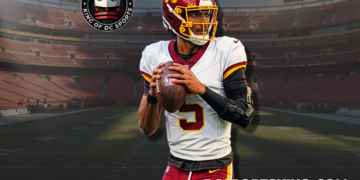
A franchise quarterback has to be the smartest player on the field when the game is on the line. Daniels’ fundamental error was fighting for unnecessary extra yardage instead of prioritizing the clock. With zero timeouts remaining and the clock ticking away, the primary objective is to get rid of the football, live to fight another down, and give the kicking unit a chance, or spike the ball immediately. Instead, the clock ran out as Daniels ran the ball. It was a glaring lack of situational awareness from a player who usually operates with profound poise.
Great teams win because their leadership, coaching, and execution align in the margins. On Sunday, Washington proved what happens when all three pillars buckle at the same moment.