





















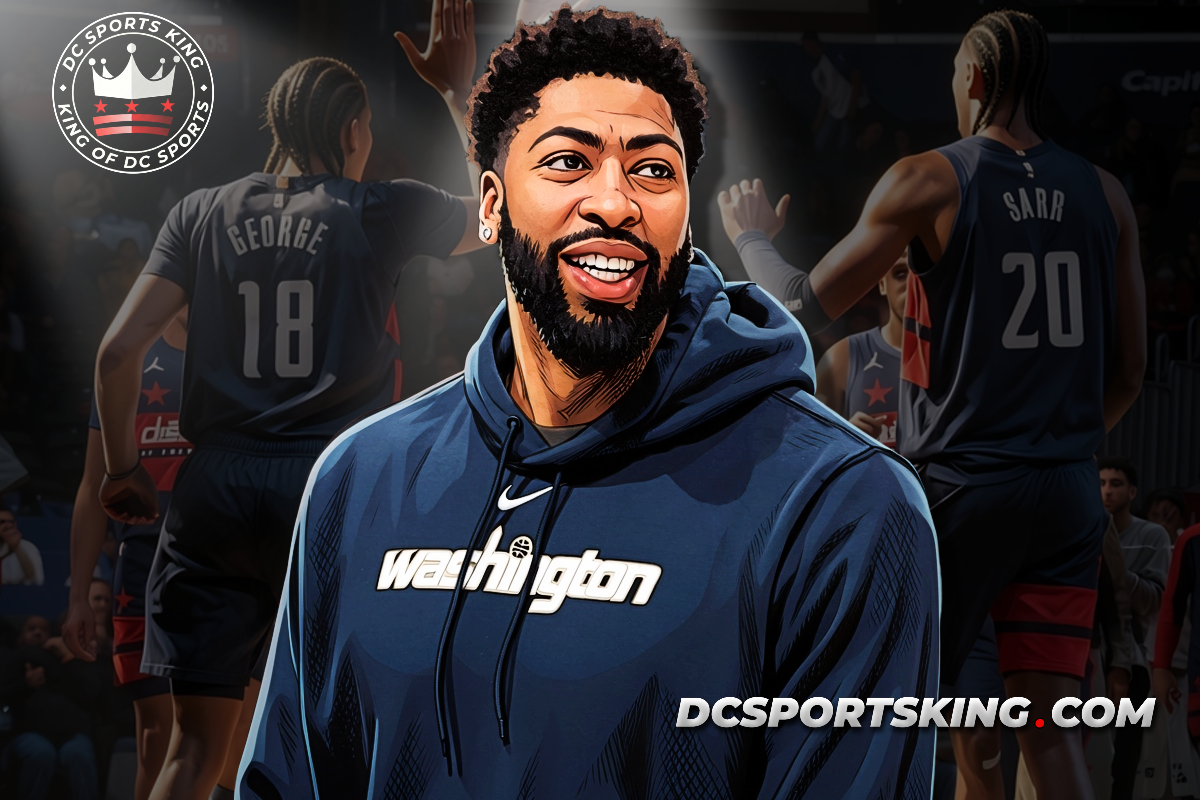
During a walk-by interview at last week’s Fanatics Fest, Washington Wizards superstar Anthony Davis dropped a series of preseason predictions that instantly ignited the NBA news cycle.
When asked about the trajectory of the 2026–27 Washington Wizards, Davis did not mince words, delivering three definitive claims:
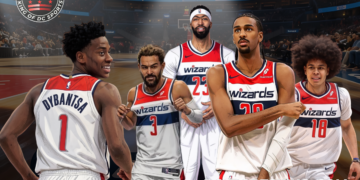
- On the Rookie of the Year: “AJ Dybantsa. That was an easy question.”
- On the Wizards’ projected record: “I don’t really care about record, but we’re gonna have 40+ wins.”
- On his personal game count: “82.”
For a franchise coming off a brutal 17-win campaign, predicting a 23-game leap is bold. However, guaranteeing a full 82-game slate from a 14-year veteran who has never played every game in a single NBA season is what really drew the basketball world’s collective skepticism. Yet, when looking at Washington’s recent roster construction—specifically the strategic acquisition of former No. 1 overall pick DeAndre Ayton—there is genuine basketball logic supporting why Davis feels so confident.
The $100,000 Skepticism: Enter Jeff Teague
It took less than 24 hours for the media pushback to materialize. Former NBA All-Star Jeff Teague used his platform on the Club 520 podcast to openly challenge the 82-game guarantee, putting real money on the line. Teague publicly wagered $100,000 that Anthony Davis would fall well short of a full season, projecting the 10-time All-Star would likely land closer to the 58-game mark.
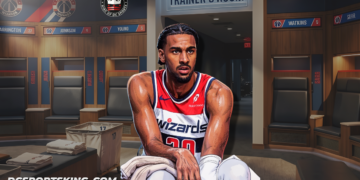
Teague’s skepticism is grounded in historical reality. During the 2025–26 season, persistent physical setbacks and a severe finger injury limited Davis to 20 games before a midseason trade from the Dallas Mavericks to the Washington Wizards. The Wizards shut him down before he could suit up for them. Throughout his career, the grueling physical demands of battling traditional centers in the paint have consistently taken a toll on his body.
Since the 2019-20 season, Davis has only appeared in more than 56 games once. During the 2023-24 season, he played in a career-high 76 games. Yet hitting the 60-game mark has been a challenge for Davis of late.
However, betting against Davis this season overlooks the fundamental shift in Washington’s front office strategy. For the first time in half a decade, Davis will not be forced to absorb the daily physical punishment of playing center.
The Ayton Insurance Policy
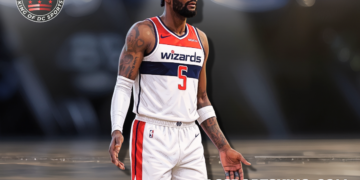
The defining move of Washington’s offseason was finalizing a trade with the Los Angeles Lakers to acquire center DeAndre Ayton. While the transaction cost the Wizards rotational assets and draft capital, it served as an essential insurance policy designed specifically to preserve Anthony Davis.
For years, Davis has made his positional preference known: he wants to play power forward (the 4), allowing him to roam defensively as an elite weak-side shot blocker without wrestling 280-pound centers on the low block. By bringing in Ayton—a legitimate 7-foot, 250-pound traditional center who averaged over 27 minutes a night as a starter in Los Angeles—Washington finally granted that wish.
Ayton’s presence completely transforms the physical toll on Davis. On defensive possessions, Ayton can anchor the paint and absorb the contact against opposing primary big men. On offense, Ayton provides a reliable rim-running presence and mid-range touch, allowing Davis to operate from the elbows, the perimeter, and in isolation without carrying the entire interior workload. If Davis reached the 70-game milestone, Ayton absorbing the physical wear and tear in the trenches will be the primary reason.
Frontcourt Depth: What Lies Behind the Anthony Davis and Ayton?
Beyond the tandem of Davis and Ayton, Washington’s front office has quietly assembled a versatile, layered interior rotation built to handle injuries and matchup shifts.
* Alex Sarr
The essential piece of Washington’s long-term rebuild is evolving into a matchup nightmare. At 7-foot-1, Sarr possesses the defensive mobility to switch onto perimeter players while offering secondary rim protection. With Ayton and Davis taking the veteran pressure off his shoulders, Sarr can slide fluidly between both the power forward and center positions, making certain that Washington always has elite length on the floor without forcing a heavy minute load on any single big man.
* Tristan Vukcevic
In case of emergency or when the offense demands maximum floor spacing, the 7-foot Vukcevic provides high-upside relief depth. Vukcevic’s ability to step out beyond the arc gives the Wizards a completely different tactical look, pulling opposing rim protectors out of the paint to open up driving lanes for Trae Young and No. 1 overall pick AJ Dybantsa.
* Felix Okpara
Adding a layer of youth and athletic rim protection, Okpara represents the developmental depth at the end of the bench. His presence assures that during grueling stretches of the schedule—like back-to-back road games—the coaching staff has an energetic shot-blocker ready to absorb regular-season fouls and eat defensive minutes.
* The Sideline Reinforcements
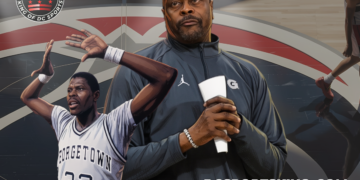
The frontcourt overhaul is not limited to the players on the hardwood. Washington also revamped its coaching staff by bringing in Hall of Fame big man Patrick Ewing alongside defensive specialist Steve Clifford. Ewing’s mentorship is tailored toward refining interior positioning and post footwork for Ayton and Sarr, while Clifford brings a structured, defense-first identity designed to maximize the massive wingspan of Washington’s frontcourt rotation.
While a jump to 40+ wins and an ironman season from Anthony Davis sound like optimistic preseason chatter on the surface, the structural changes in Washington suggest a legitimate shift. By acquiring proven interior insurance in DeAndre Ayton, developing versatile depth behind him, and reinforcing the coaching staff with defensive masters, the Wizards have built an environment where their franchise centerpiece is supported, protected, and positioned to prove doubters like Jeff Teague wrong.