
































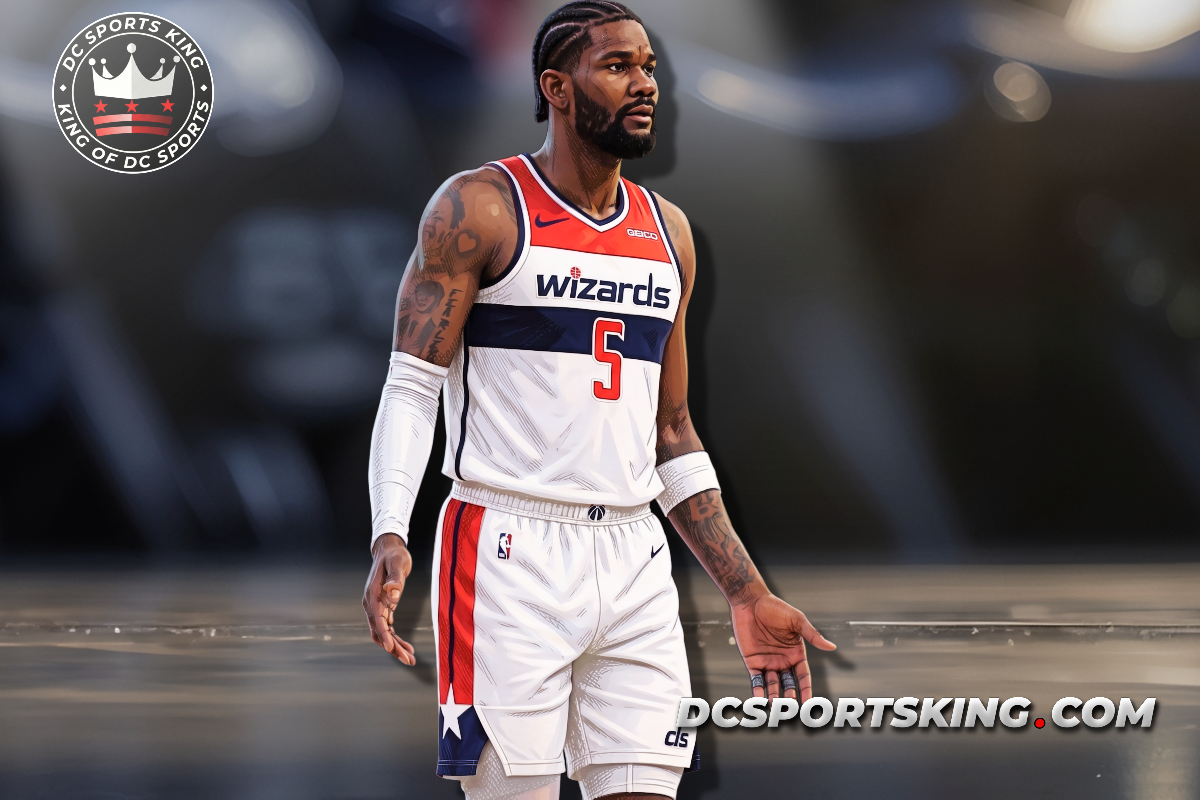
When the news dropped that the Washington Wizards had acquired former No. 1 overall pick DeAndre Ayton from the Los Angeles Lakers, the initial reaction across the D.C. sports landscape remained a familiar mix of intrigue and skepticism.
At first glance, adding a 27-year-old big man with a documented history of inconsistent focus to a roster trying to establish its identity feels like a head-scratcher. It begs an immediate, pressing question: Are the Wizards just collecting names at this point?
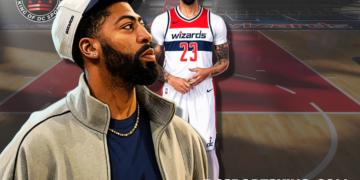
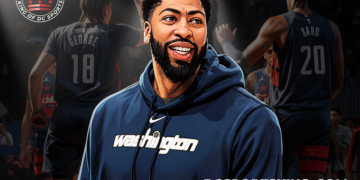
To understand why Washington made this move—and why it might actually be a savvy piece of roster management—you have to look past the marquee name on the back of the jersey. You have to examine the contract, the rotation, and how Ayton fits into a frontcourt dynamic that currently features a 10-time All-Star, Anthony Davis, anchoring the middle alongside an emerging young core.
The Trade Breakdown
Before evaluating the basketball fit, let’s look at the asset exchange:
| Team | Received | Key Takeaway |
| Washington Wizards | DeAndre Ayton | Low-cost interior depth on an expiring $8.1M player option. |
| Los Angeles Lakers | Jaden Hardy, 2031 2nd-Round Pick, 2032 2nd-Round Pick | L.A. clears center logjam after acquiring Walker Kessler. |
Washington parted ways with Hardy—who provided solid microwave scoring off the bench—along with two distant second-round picks. In return, they absorbed the final year of Ayton’s deal.
Are the Wizards Just Collecting Names?
The short answer: No. This isn’t a desperate attempt to sell tickets by bringing in a recognizable veteran whose best days are behind him. It is a calculated, low-risk reclamation project designed to insulate their current rotation.
In Phoenix, Portland, and Los Angeles, Ayton was expected to be a franchise co-star or a high-usage defensive anchor. When he didn’t consistently play with an unrelenting motor, frustration boiled over.
In Washington, the expectations are fundamentally different. The Wizards didn’t trade valuable first-round capital or foundational young players. By buying low on a player who averaged 12.5 points and 8.0 rebounds while shooting a career-high 67.1% from the floor last season, Washington gains a high-efficiency finisher without anchoring their salary cap long-term. If Ayton buys in, he becomes a valuable trade deadline chip for a contender needing frontcourt size. If he doesn’t, his contract expires at the end of the season.
The AD Factor & The Blueprint for Ayton
To properly evaluate this trade, we have to address the elephant in the paint: Anthony Davis.
Despite recent trade buzz connecting Davis to contenders like Golden State, the Wizards’ front office has held firm that they have no interest in moving him, viewing AD and Trae Young as veteran pillars to accelerate the rebuild. If Washington keeps AD as their starting center heading into the season, bringing in Ayton actually makes far more basketball sense.
Here is the blueprint for Ayton in a rotation featuring Davis:
- The Ultimate AD Insurance Policy: Anthony Davis played a career-low 20 games last season and has famously battled injuries throughout his career. Relying on a 33-year-old AD to absorb 82 games of bruising interior punishment is a recipe for disaster. Ayton gives head coach Brian Keefe a legitimate, 7-foot, 250-plus-pound body to eat up taxing interior minutes, taking the physical pressure off Davis during the regular season.
- Twin-Tower & Bench Stability: When Davis needs rest—or on nights he sits out for load management—Washington doesn’t suffer a massive drop-off in sheer size. Unlike his stops in L.A. or Portland, where starting minutes were guaranteed, Ayton enters Washington with clear marching orders: anchor the second unit, dominate backup bigs on the glass, and keep the offense moving forward.
- Streamlined Responsibilities: Ayton won’t be asked to carry the load. Playing behind or alongside a generational defensive anchor like AD simplifies his role strictly to screen-and-roll play-finishing and defensive rebounding.
Where Does This Leave the Young Frontcourt?
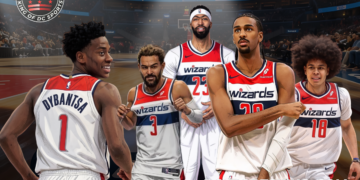
Bringing in Ayton to join a center room already headlined by Anthony Davis inevitably raises questions about developmental minutes for Washington’s emerging core. Here is how the big-man hierarchy shakes out:
1. Alex Sarr: Freedom to Roam
Let’s be crystal clear—Alex Sarr’s long-term development remains Priority No. 1. Having both Anthony Davis and DeAndre Ayton on the roster does not block Sarr; rather, it completely unlocks his positional versatility. Instead of forcing a 21-year-old Sarr to wrestle with 270-pound traditional centers in the post, Keefe can deploy him heavily at the power forward spot. Sarr thrives when he can act as a weak-side roamer and perimeter disruptor. Insulating him with AD and Ayton prevents physical burnout while giving him two elite screen-setters to learn from.
2. Julian “Juju” Reese: A Battle of Opposites
Julian Reese’s emergence as an undrafted rebounding machine has been one of the brightest spots in Washington’s recent player development track record. With AD starting and Ayton stepping in as the primary veteran backup, Reese faces immediate competition for minutes. However, Reese’s indefatigable, high-energy style is the exact opposite of Ayton’s more methodical pace. This creates a healthy internal hierarchy: Reese’s persistent effort on the glass ensures Ayton can’t take nights off, while Ayton provides Reese with a seasoned, physical sparring partner in daily practices.
3. Tristan Vukčević: The Tactical Stretch-Big Contrast
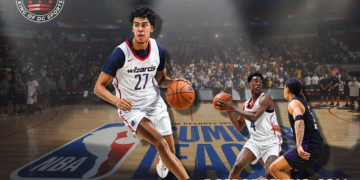
At 7-feet tall, Vukčević isn’t battling Ayton for traditional, low-post center duties; instead, he offers a dynamic pick-and-pop floor-spacing counter-punch. Where Ayton makes his living diving to the rim and operating out of the screen-and-roll, Vukčević thrives floating to the perimeter to pull opposing interior defenders out of the paint. Having Ayton absorb the heavy physical toll against bruising traditional fives actually frees up Vukčević to be deployed in specialized stretch-five lineups or paired alongside a traditional big as a shooting forward, ensuring his offensive versatility isn’t overshadowed by physical defensive mismatches in the paint.
Final Verdict
It is easy to look at DeAndre Ayton’s recent career trajectory and label this trade an unnecessary gamble—especially with Anthony Davis already slated to start at the five. But when evaluated through the lens of asset management and roster protection, it is a calculated win.
Washington gave up minimal future capital to secure a productive, expiring interior presence who provides critical injury insurance for Anthony Davis, shields Alex Sarr from physical wear and tear, and offers a traditional baseline contrast to specialists like Julian Reese and Tristan Vukčević. The Wizards aren’t just collecting names—they are building a deep, insulated frontcourt while preserving their long-term flexibility.