






























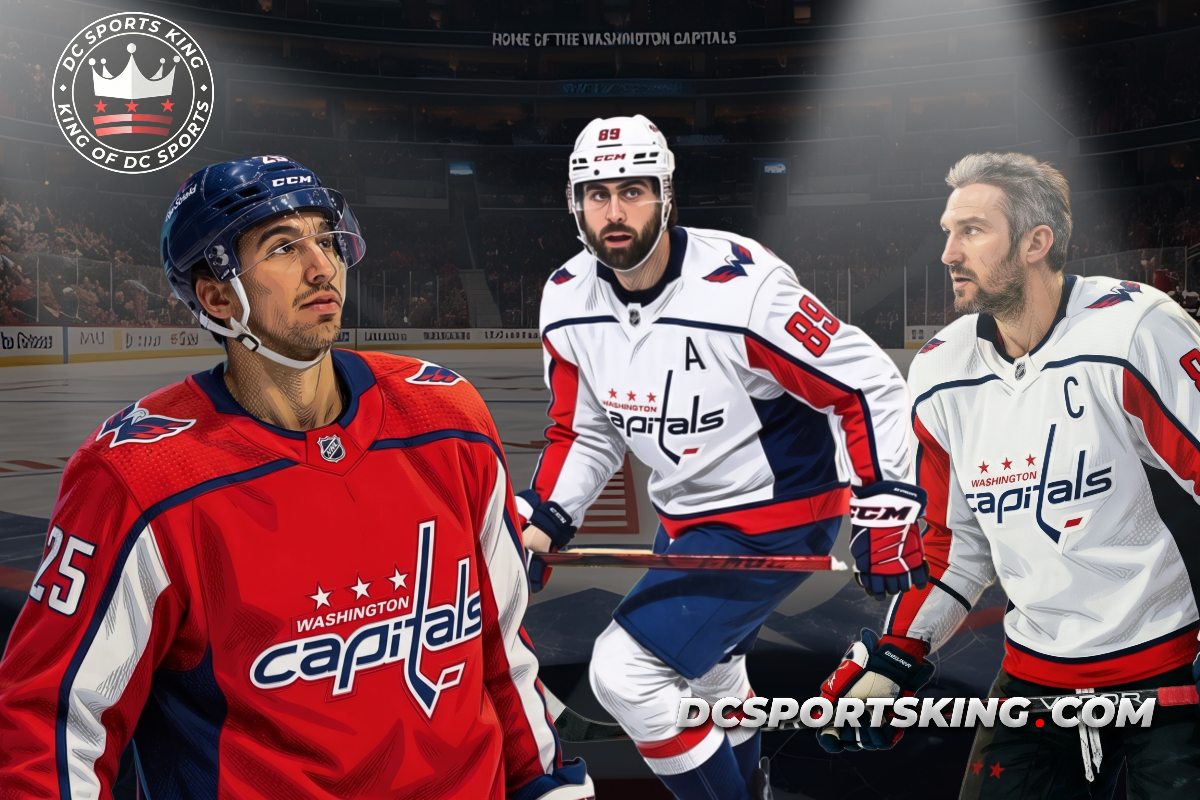
If you thought the Washington Capitals were going to quietly fade into a lengthy rebuild, General Manager Chris Patrick just delivered a loud and expensive wake-up call.
In the span of a few days, the Capitals completely overhauled their top-six forward group, acquiring elite playmaker Jordan Kyrou from the St. Louis Blues before dropping a massive sign-and-trade blockbuster for power forward Alex Tuch.
This isn’t a team looking to hoard draft picks and suffer for half a decade. This is a front office aggressively transitioning to a new era while keeping the competitive window wedged open. Here is a breakdown of what these massive swings mean for Washington’s lineup, their mindset, and the “Great Eight” himself.
The Alex Tuch Blockbuster: Power and Term
The Capitals didn’t just acquire Alex Tuch from the Buffalo Sabres as a one-year rental; they locked him down. By sending forward David Kampf and a 2027 third-round pick to Buffalo in a sign-and-trade, Washington secured Tuch on an eight-year, $84 million extension ($10.5M AAV).
Tuch brings an incredibly rare toolkit to the District. He is a 6-foot-4, 220-pound winger who skates like the wind, drives to the net with malice, and plays a highly responsible 200-foot game. He essentially fills the void of a prime Tom Wilson, but with a higher offensive ceiling. After setting a single-season record for blocked shots by a forward in Buffalo, Tuch proved he is a player who is able to seamlessly toggle between top-unit power-play duties and high-leverage defensive zone starts.
The Yin and Yang: Fitting Tuch and Kyrou Together
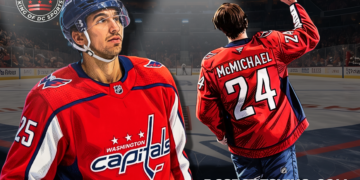
Earlier in the week, Washington paid a steep price to St. Louis—parting with Connor McMichael, prospect Milton Gastrin, and the 16th overall pick in the 2026 NHL Draft—to bring in Jordan Kyrou.
On paper, Tuch and Kyrou are the perfect complementary duo to anchor the Capitals’ top six:
- The Finesse (Kyrou): An elite, dynamic skater with high-end offensive creativity. Kyrou excels at carrying the puck through the neutral zone, generating scoring chances off the rush, and setting up teammates.
- The Power (Tuch): The workhorse who retrieves pucks, wins board battles, and creates havoc in the blue paint. Tuch provides the physical runway that allows a player like Kyrou to operate in open ice.
The Projected Top Six
With these two massive stars in the mix, here is how the top two forward units are projected to look on the ice:
| Line | Left Wing | Center | Right Wing |
| Line 1 | Aliaksei Protas | Dylan Strome | Jordan Kyrou |
| Line 2 | Alex Tuch | Pierre-Luc Dubois | Tom Wilson |
Line 1: The Playmakers
Protas – Strome – Kyrou
This line is built for speed and creativity. Dylan Strome remains the reliable offensive engine down the middle, while Kyrou brings elite puck-carrying ability and transition speed on the right side. Aliaksei Protas provides the massive 6-foot-6 frame needed to retrieve pucks, win board battles, and create space for Strome and Kyrou to operate.
Line 2: The Heavyweights
Tuch – Dubois – Wilson
This is arguably the most physically intimidating line in the NHL. You have three players who are 6-foot-4 or taller, all weighing 220+ pounds, and all capable of playing a heavy, punishing game while still possessing high-end scoring touch. Tuch shifts to the left side here, creating a nightmare matchup for opposing defensemen who have to deal with him, Dubois, and Wilson constantly driving the net and dominating the cycle.
The Mindset: Win Now, Transition Later
Chris Patrick’s message is crystal clear: there will be no dark ages in Washington.
By moving a first-round pick and a young, established NHLer in McMichael, the Capitals are signaling they want to compete immediately in the Metropolitan Division. They are betting that their core, augmented by these two massive additions, can still hang with the heavyweights of the Eastern Conference.
It’s an organizational philosophy shift. Rather than bottoming out to draft high-end talent, they are using their cap space and assets to acquire stars already entering their primes. Kyrou (28) and Tuch (30) are established commodities who reset the timeline, giving the Caps a competitive foundation for the next five to eight years.
The Ovechkin Factor: One Last Ride or Passing the Torch?
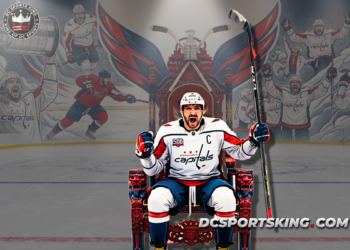
Hanging over all of this is Alex Ovechkin’s pending decision on whether to return for the 2026-27 season or hang up his skates. Surprisingly, the Tuch and Kyrou acquisitions are perfectly insulated against either choice.
If Ovechkin Returns:
This is the best supporting cast Ovi has had in half a decade. If the Captain comes back for one more run, he no longer has to carry the offensive burden alone. Opposing defenses won’t be able to simply shadow the left circle. With Kyrou skating through the neutral zone and Tuch screening the goalie or winning puck battles on the opposite wing, Ovechkin will find more open ice and cleaner looks. It is the ultimate “all-in” push to help him chase another Stanley Cup—and pad his all-time goals record.
Note: In this scenario, Ovechkin would slide right back into his top-line left wing spot, likely moving Protas into the middle six.
If Ovechkin Retires:
If the greatest goal-scorer in NHL history decides to call it a career, the Capitals are protected against a catastrophic offensive drop-off. Losing Ovechkin’s production would sting, but a top six anchored by Tuch, Kyrou, and a rising young star like Ryan Leonard ensures the team remains dangerous. Tuch and Kyrou serve as the bridge to the next generation, preventing the franchise from sinking into irrelevance and giving the fanbase a highly entertaining, fast-paced team to watch as the post-Ovi era begins.