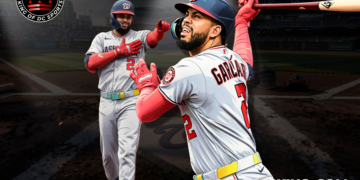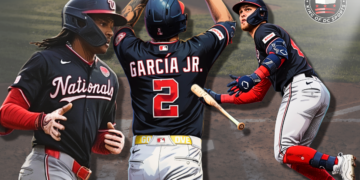





































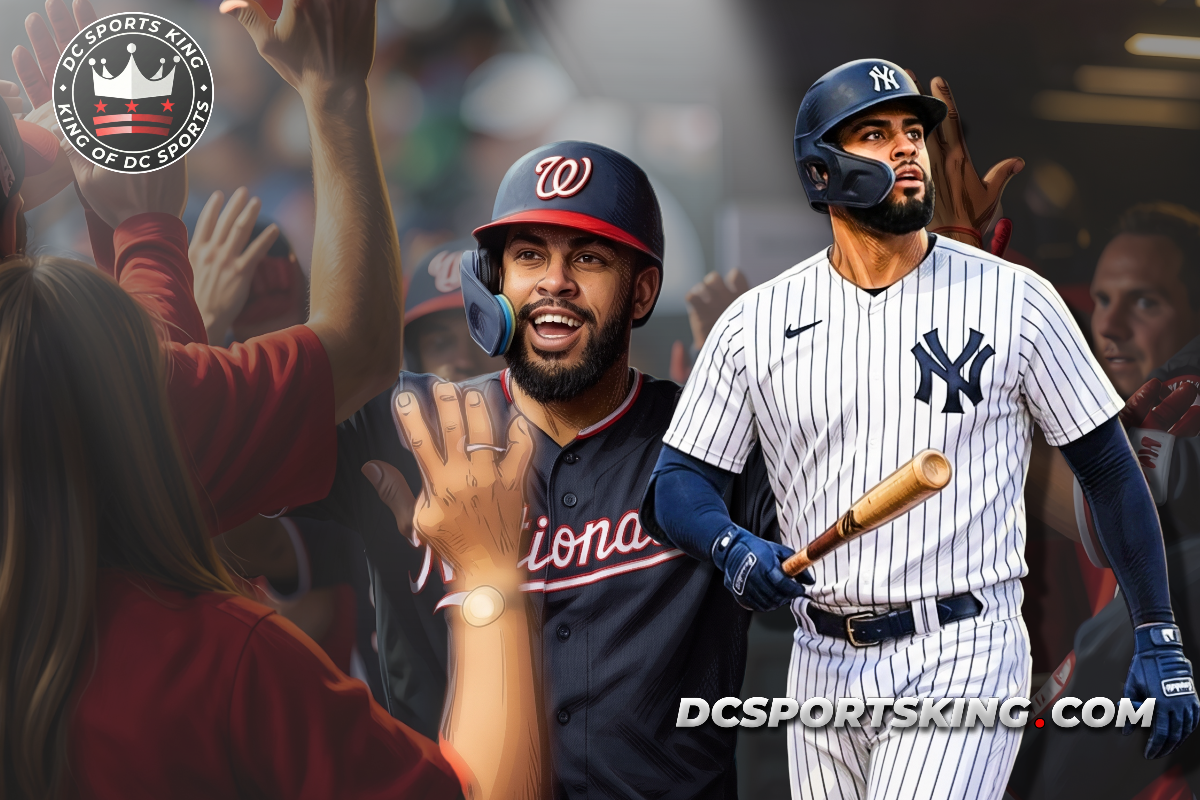
In a significant deadline deal, the Washington Nationals traded 26-year-old first baseman Luis García Jr. to the New York Yankees on Sunday. To bolster the pitching staff, Washington acquired four right-handers in return: Yovanny Cruz, Jake Bird, Ben Grable, and Jack Cebert.
While trading a top offensive producer mid-season sparks debate, analyzing the deal’s contextual factors reveals a calculated front-office strategy.
The Disheartening Reality of a Breakout Departure
Watching a homegrown talent leave the organization precisely once everything clicks is understandably frustrating for any fanbase. García Jr. is currently assembling a career-defining 2026 campaign. Through 104 games, the Dominican Republic native has posted elite offensive metrics:
- .283 Batting Average
- 23 Home Runs
- .873 OPS
- 134 wRC+
Most notably, his .560 slugging percentage currently leads the entire National League. Shipping away a young, controllable athlete during a massive statistical spike creates an immediate void in the middle of the lineup and removes one of the season’s brightest developments.
A Rocky Road to Stardom
What makes his departure particularly difficult to swallow is the patience the organization invested in his development. García Jr.’s path to stardom was far from linear.
Debuting in 2020 as a 20-year-old top prospect, he initially struggled to handle major league pitching. He spent the better part of 2021 and 2022 bouncing between the major league roster and Triple-A Rochester. During that 2022 campaign, he was heavily tested defensively at shortstop, where he struggled, committing 13 errors in just 58 games before ultimately shifting to second base (and eventually first base).
Even recently, his production fluctuated. After a promising 2024 season, his numbers regressed in 2025, finishing the year slashing just .252/.289/.412. To see him finally conquer those inconsistencies and evolve into a premier slugger in 2026, only to be traded away, is a bitter pill for supporters who watched him overcome those developmental hurdles.
Why the Timing was Flawless
In spite of the immediate sting of losing a premier bat, trading García Jr. now represents a demonstration of capitalizing on peak asset valuation. The timing fit perfectly with external market influences:
- Exploiting Desperation: The New York Yankees entered August severely depleted by injuries to key sluggers, including Aaron Judge, Cody Bellinger, and Giancarlo Stanton. This offensive cratering forced New York to aggressively seek a middle-of-the-order replacement, giving Washington immense leverage in negotiations.
- Maximizing Contractual Value: García Jr. is only under club control through the 2027 season. By moving him during a career year—rather than waiting for potential regression or the pressure of an impending free-agency walk year—the front office ensured a maximum return on investment. Selling high is the pillar of effective roster management.
Addressing the Biggest Roster Need
By leveraging García Jr.’s breakout year, Washington systematically addressed its most glaring systemic deficiency: pitching depth. The return package infuses the organization with a blend of immediate bullpen reinforcements and long-term prospect capital.
The Return Package Breakdown:
- Yovanny Cruz (RHP): An immediate bullpen addition who possesses high-leverage potential. Cruz boasts an elite 121 Stuff+ rating and dominated the Triple-A level with a 34.7% strikeout rate and a 41.5% whiff rate.
- Jake Bird (RHP): A veteran arm who brings much-needed major league experience to stabilize the current relief corps.
- Jack Cebert & Ben Grable (RHP): Two young arms who were ranked as top-30 prospects in the Yankees’ pipeline. Their addition strengthens the farm system and provides future rotational or relief options.
Moving a top hitter is never an easy decision, but leveraging peak offensive production to overhaul organizational pitching depth is a fundamental step toward building a balanced, competitive roster for the future.