


































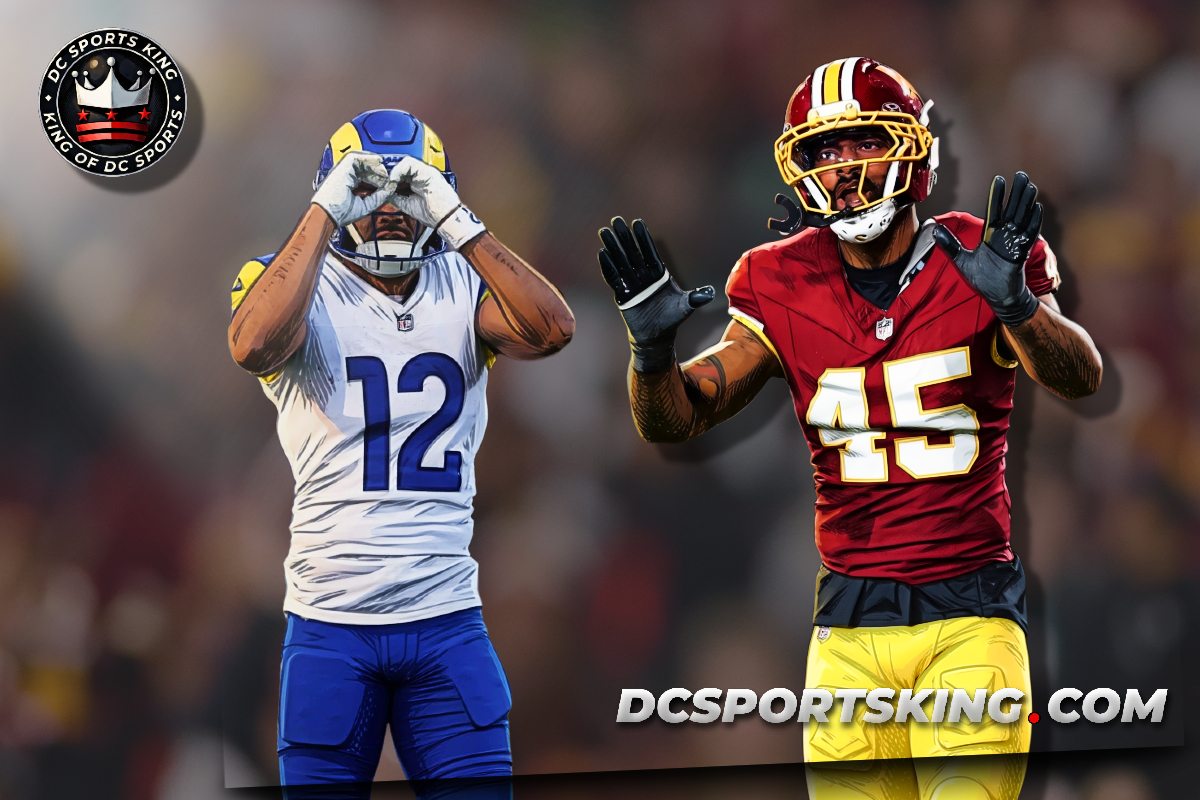
In the modern, high-octane NFL, holding a Sean McVay offense to 20 points should be a sure path to a victory. The Washington Commanders’ defense did exactly that on Sunday at Northwest Stadium, largely containing Matthew Stafford and the Los Angeles Rams in a 20-13 slugfest. Statistically, the unit played well enough to win. Emotionally? They left the field frustrated, dissatisfied, and searching for answers.
The root of that frustration didn’t come from a complex, unsolvable scheme. It came from a single, undeniable force that Washington knew was coming but simply couldn’t stop: Puka Nacua.
The Rams’ Blueprint Was Obvious
Going into Week 9, the scouting report on the Rams wasn’t a mystery. The defensive game plan centered on keeping Nacua in check, minimizing his yards after the catch, and forcing Stafford to look elsewhere. Linebackers Frankie Luvu and Sonny Styles spoke all week about the need to keep the physical receiver “in the phone booth” and maintain premium awareness of his alignment.
Yet, when the final whistle blew, Nacua had torched the Commanders’ secondary for a staggering 150 yards and a go-ahead touchdown on 14 receptions. He was targeted 19 times—essentially serving as the engine, transmission, and steering wheel of the Los Angeles offense. The Rams didn’t disguise their intentions; they lined up, fed their All-Pro weapon, and dared Washington to stop it.
When a defense executes a game plan against a trick-play-heavy offense and gets beat, it’s a schematic loss. When they know exactly who is getting the ball, where he’s going, and still can’t get him on the ground—that’s an execution failure. And the locker room knew it.
K’Lavon Chaisson’s Brutal Honesty
No one captured the defense’s collective frustration better than edge rusher K’Lavon Chaisson. Speaking to the media postgame, Chaisson delivered a raw, brutally honest assessment of what went wrong.
“So as a defense we have to just figure out how to stop that,” Chaisson said. “When you have a game plan that easy — they’re not hiding what they’re doing. They’re finding ways to get Puka the ball — what was it, 20-something targets? … Days like this for the defense, it hurts a little bit more.”
Chaisson’s candor hits at the core of Washington’s defensive angst. The Rams weren’t utilizing smoke and mirrors. Stafford was getting the ball out fast, neutralizing the Commanders’ pass rush before they could create the havoc Chaisson had called for earlier in the week. In the secondary, the coverage was a half-step behind all afternoon. Nacua’s go-ahead touchdown capped a sequence where everyone in the stadium knew where the ball was heading, but Washington was powerless to prevent the catch.
The Standard is Higher
The Commanders are at a decisive point in their season. While head coach Dan Quinn rightfully pointed out that the team failed to play complementary football—noting that the offense couldn’t capitalize on the defense’s critical stops—the defense isn’t letting itself off the hook.
Giving up 14 catches to a single receiver is a structural breakdown. As rookie linebacker Sonny Styles echoed after the game, “They did exactly what they put on tape.”
For a team with its eyes on a postseason push, “playing well enough to win” on the scoreboard means nothing if the situational execution fails when it matters most. The Commanders held the Rams to 20 points, but in the moments where the game rested in the balance, they let the one guy they swore to stop beat them. And as Chaisson made abundantly clear, those are the losses that sting the longest.