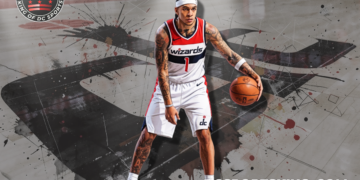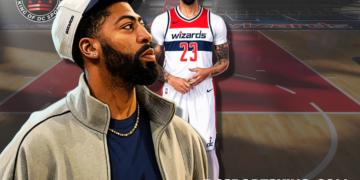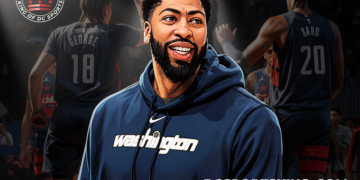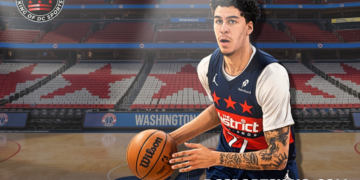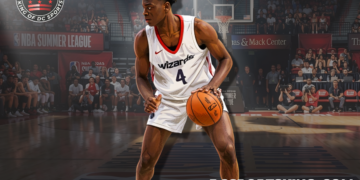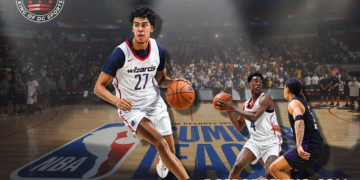










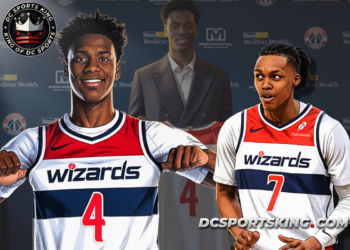
























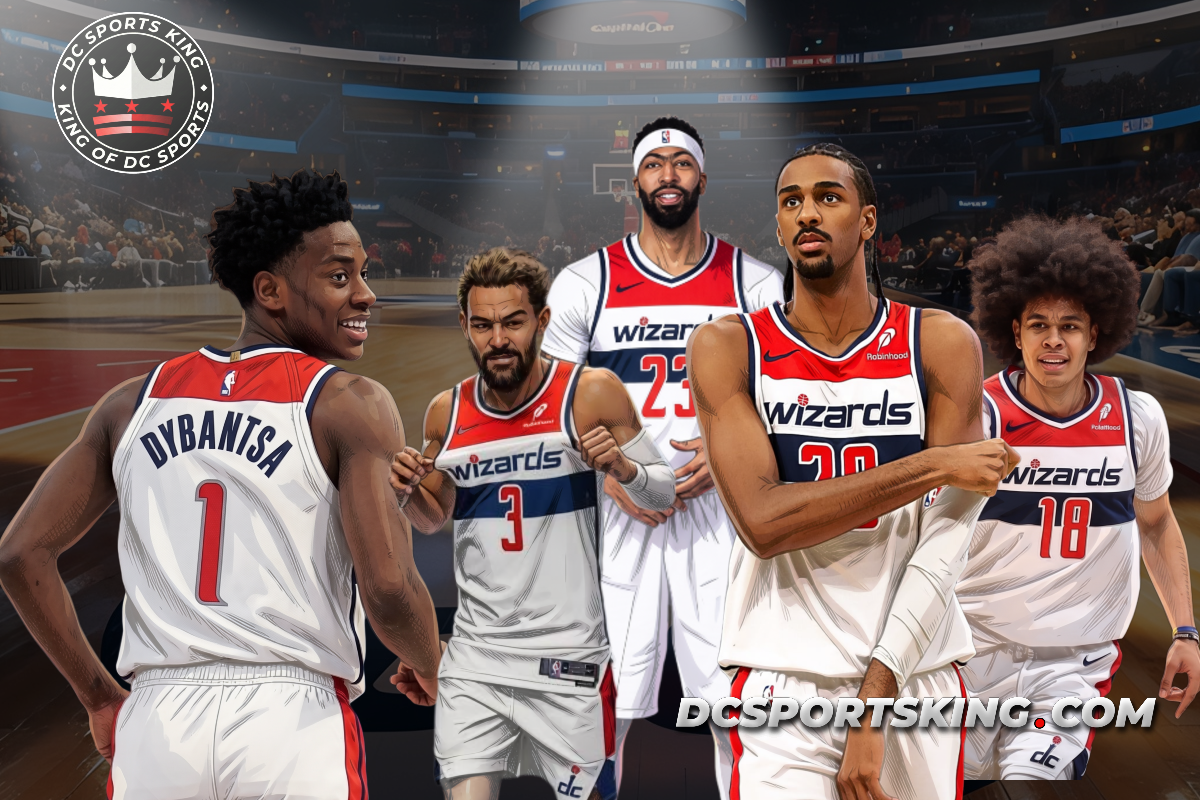
The Washington Wizards have just completed the most fascinating, mind-boggling 18 months in modern NBA roster construction. First, the front office executed a striking double-heist at the trade deadline, taking Trae Young off Atlanta’s hands and grabbing Anthony Davis from Dallas while protecting their own lottery draft capital. The ping-pong balls rewarded that brazen gambit: Washington selected 19-year-old BYU phenom AJ Dybantsa with the No. 1 overall pick on Tuesday.
Now comes the fun part. You have a lethal offensive hub who views perimeter defense as a kind suggestion (Trae), a generational big man who needs his regular-season physical load managed (AD), a pair of French twin towers (Alex Sarr and Bilal Coulibaly), and a hyper-talented young guard rotation (Bub Carrington and Tre Johnson).
How does a 6-foot-9 prototype wing tie GM Will Dawkins’ entire mad-scientist experiment together? Let’s break down the blueprint.
Balancing the Attack: Splitting the Playmaking Load
When Trae Young signed his four-year, $212 million extension on the eve of the draft, it solidified Washington’s offensive identity: high pace, heavy pick-and-roll volume, and deep floor spacing. But Trae’s historic ceiling in Atlanta was capped by the lack of a dynamic, oversized release valve when playoff defenses trapped him 35 feet from the hoop.
Enter Dybantsa. Operating as a point-forward at BYU — where he led the nation with 25.5 points per game — Dybantsa brings a Tracy McGrady-esque fluidity to the half-court.
- The Second-Side Creator: When Trae gets blitzed in the pick-and-roll with Anthony Davis or Alex Sarr, the ball swings to Dybantsa attacking a rotating defense. At 6’9″ with an explosive first step, he can shoot right over recovering guards or drive to the rim through contact.
- Lightening the Initiation Burden: You don’t want Trae initiating 90% of your possessions. Dybantsa’s vision allows Washington to run actions where Trae operates off-ball as a movement shooter—a wrinkle that forces defenses into unmanageable mismatch decisions.
- Transition Overdrive: Imagine Alex Sarr securing a block and flipping it to Trae, who immediately launches a 70-foot hit-ahead pass to a sprinting Dybantsa or Bilal Coulibaly. The vertical spacing is instantaneous.
The Anchor System: Letting Trae Rest on Defense
Let’s be candid: pairing Trae Young with a teenage rookie wing sounds like a recipe for perimeter blow-bys. But look at the sheer, terrifying length of the defensive infrastructure Washington has dropped behind them.
| Player | Wingspan | Primary Defensive Role |
| Bilal Coulibaly | 7’2″ | Point-of-Attack Lock (Chasing opposing PG/SG) |
| AJ Dybantsa | 6’11” | Jumbo Wing Stopper (Tatum, Banchero, Luka matchups) |
| Alex Sarr | 7’4″ | Mobile Free-Safety & Weakside Eraser |
| Anthony Davis | 7’6″ | Primary Rim Anchor & Drop-Coverage Master |
With Coulibaly taking the quickest perimeter threat and Dybantsa using his 8’10” standing reach against big physical wings, the coaching staff can safely hide Trae in the corner on the opponent’s lowest-usage spot-up shooter. If an offensive player actually breaks the perimeter containment, they are met at the summit by a combination of Sarr and Davis. It is a historically long four-man fortress designed to make one backcourt defensive minus completely irrelevant.
The Second Unit: Staggering the Youth Movement
An elite starting five gets you national television games, but regular-season win totals are decided by the non-Trae and non-AD minutes. This is where Washington’s deep draft capital over the last three years pays massive dividends.
The Jumbo “Young Core” Run
When the veterans sit, the Wizards can roll out an ultra-switchable, high-octane unit:
- Guard: Bub Carrington (steady pace, elite pull-up game)
- Guard: Tre Johnson (pure microwave three-level scoring)
- Wing: Kyshawn George / Will Riley (high-IQ connective passing and spot-up shooting)
- Forward: AJ Dybantsa (acting as the undisputed primary alpha hub)
- Center: Alex Sarr (anchoring the floor as a small-ball 5)
Staggering Dybantsa with Bub Carrington and Tre Johnson gives the second unit lethal structure. Carrington possesses the maturity to control the tempo so the offense doesn’t devolve into contested hero ball, while Johnson’s perimeter gravity opens up wide driving lanes for Dybantsa’s baseline drives. Meanwhile, Kyshawn George acts as the ultimate super-sub glue guy—a 6’8″ wing who keeps the ball moving and hits open catch-and-shoot looks at a high clip.
The Final Verdict
For years, the Wizards were trapped in the NBA’s most depressing zip code: the middle. By tearing the structure down to the studs, absorbing massive star power at its lowest market cost, and striking absolute gold with AJ Dybantsa, Washington hasn’t just escaped purgatory. They’ve built a modern, positionless juggernaut that pairs high-IQ veteran dominance with boundless teenage athleticism.
The lab is officially open in D.C. The rest of the Eastern Conference should be very afraid.