










































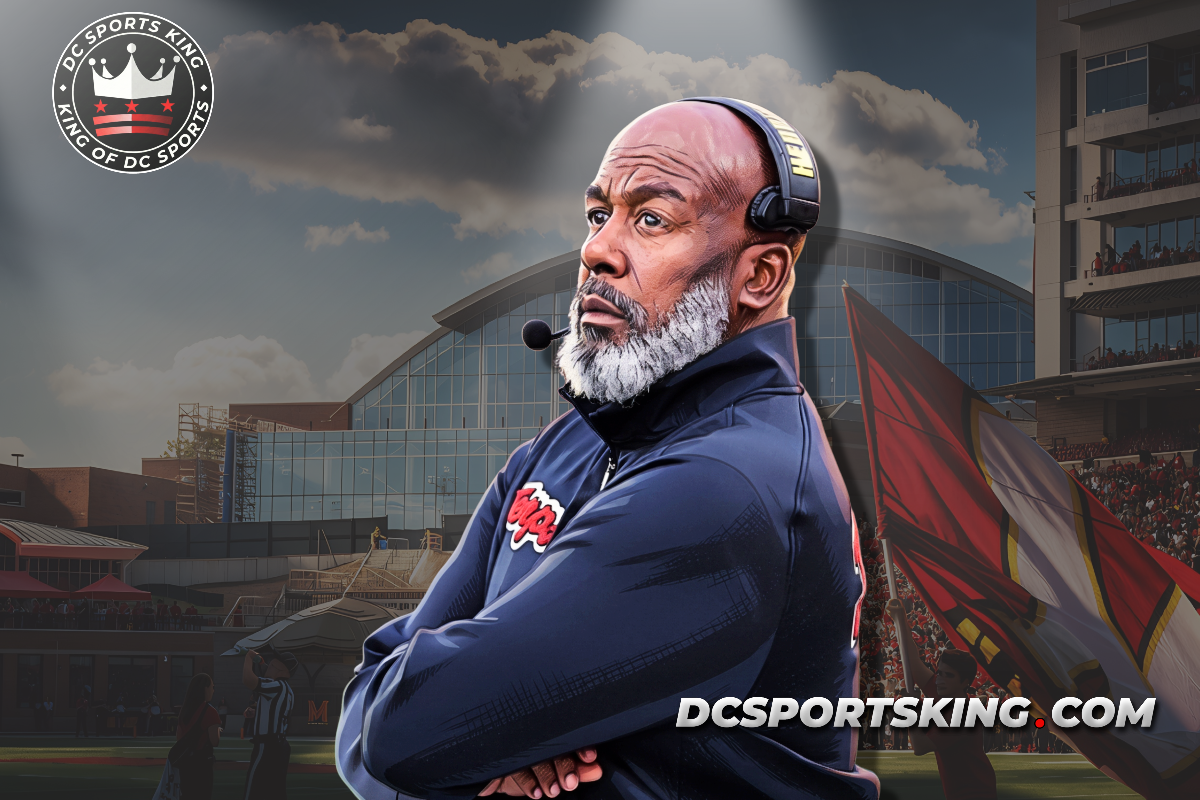
The temperature in College Park has officially reached a boiling point. As the Maryland Terrapins gear up for the 2026 college football season, head coach Mike Locksley is walking onto the field with one of the most pressurized mandates in the Big Ten.
Following a highly disappointing 2025 campaign, a vocal segment of the fanbase was ready to turn the page. Instead, Athletic Director Jim Smith announced last November that Locksley would return for his eighth season. But make no mistake: the decision was not merit-based. Instead, it was a calculated, financially driven stay of execution.
Is this a make-or-break year for the hometown head coach? Absolutely. But to understand how Maryland got here, you have to look at the intersection of on-field ceilings, recruiting realities, and cold, hard athletic department economics.
The Track Record: Raising the Floor, Hitting the Ceiling
When Mike Locksley took over a fractured program ahead of the 2019 season, he inherited an absolute mess. To his immense credit, he stabilized the Terrapins. He leveraged his deep ties to the DMV to bring local talent home, eventually snapping a bowl drought and leading Maryland to three consecutive bowl victories from 2021 to 2023. Under his watch, the program produced NFL draft picks and boasted record-setting quarterback play.
But the progress plateaued. The narrative that has defined the Locksley era is the inability to crack the glass ceiling of the Big Ten’s elite. While Maryland learned how to handle the lower and middle tiers of the conference, they routinely faltered—often in blowout fashion—against heavyweights like Ohio State, Michigan, and Penn State.
When the 2024 and 2025 seasons failed to deliver the next competitive leap, frustration grew. The program’s floor had been raised, but the ceiling suddenly looked lower than ever.
The Financial Reality: Why Locksley is Back
If college football were played in a vacuum, Maryland may have made a coaching change after the 2025 season. But in the modern era of the sport, athletic department balance sheets often dictate the roster.
Firing Mike Locksley in 2025 would have triggered a buyout in the neighborhood of $13 million to $13.4 million. In the SEC or at a Big Ten blue-blood, boosters might write that check by lunchtime. At Maryland, it was a massive hurdle. The university’s athletic department has historically struggled to stay in the black since joining the conference, reportedly incurring $32.7 million in operating losses over the previous five-year stretch.
AD Jim Smith and the university brass were faced with a brutal math problem. Paying a $13 million buyout wouldn’t just empty the coffers; it would actively handicap the next head coach. In the current landscape, whatever money is spent on a buyout is money not being funneled into the program’s Name, Image, and Likeness (NIL) collective.
The administration made a pragmatic, if unpopular, choice. Rather than eating a massive dead-cap hit and leaving the NIL war chest empty, Smith opted to retain Locksley. The strategic gamble is that redirecting available donor funds toward player retention, transfer portal acquisitions, and competitive NIL packages will yield a better return on investment than a costly coaching search.
Recruiting vs. The Big Ten Gauntlet
Locksley’s calling card has always been his recruiting prowess. He is a master at building relationships in the talent-rich DMV corridor. Even despite the struggles of 2025, his staff continued to land high-profile commitments and handle the portal with tenacity.
However, great recruiting classes only buy you so much time if they don’t translate to Saturday upsets. Maryland is now in a supercharged, 18-team Big Ten that features heavy-hitters from coast to coast. There are no easy weeks anymore.
Navigating the 2026 Schedule
If Locksley is going to prove his worth, he will have to do it against a brutal 2026 slate that leaves very little room for error. The season opens with a manageable stretch against Hampton and UConn, but quickly ramps up with a primetime non-conference clash against former ACC rival Virginia Tech.
Once Big Ten play begins, the gauntlet is relentless. The Terps host conference newcomer UCLA to open league play before embarking on back-to-back, hostile road trips against Nebraska and perennial powerhouse Ohio State in October. The back half of the schedule offers no reprieve. November includes a physical matchup against Wisconsin, a daunting cross-country trip to Los Angeles to face USC, and a brutal regular-season finale at home against Penn State. Surviving this 18-team super-conference schedule will demand elite execution and the exact kind of signature upsets that have eluded Locksley thus far.
Does Locksley have to handle this brutal gauntlet flawlessly to keep his job? Not necessarily. The administration isn’t expecting a sudden leap to a Big Ten Championship game in 2026. What they are demanding is proof of concept. They need to see a team that doesn’t fold in the third quarter against ranked opponents. They need to see a return on the NIL investments made this offseason. Most importantly, they need a return to bowl eligibility and a team that looks structurally sound in November.
The Final Verdict
Mike Locksley is coaching for his professional life in College Park this fall. The university’s financial limitations bought him a lifeline for 2026, but the athletic department cannot afford another season of apathy and dwindling ticket sales. Locksley must show something beyond his 37-49 record as Maryland’s head coach.
If Locksley can pull off a signature upset, galvanize the local recruiting base, and guide the Terps through the treacherous waters of the new-look Big Ten, he can flip the script and secure his long-term future. If the team stumbles again, the financial arithmetic will change, and the 2026 season will likely be his last stand in Maryland.