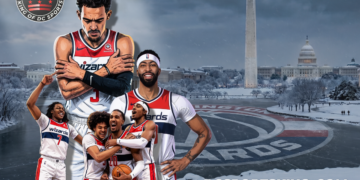














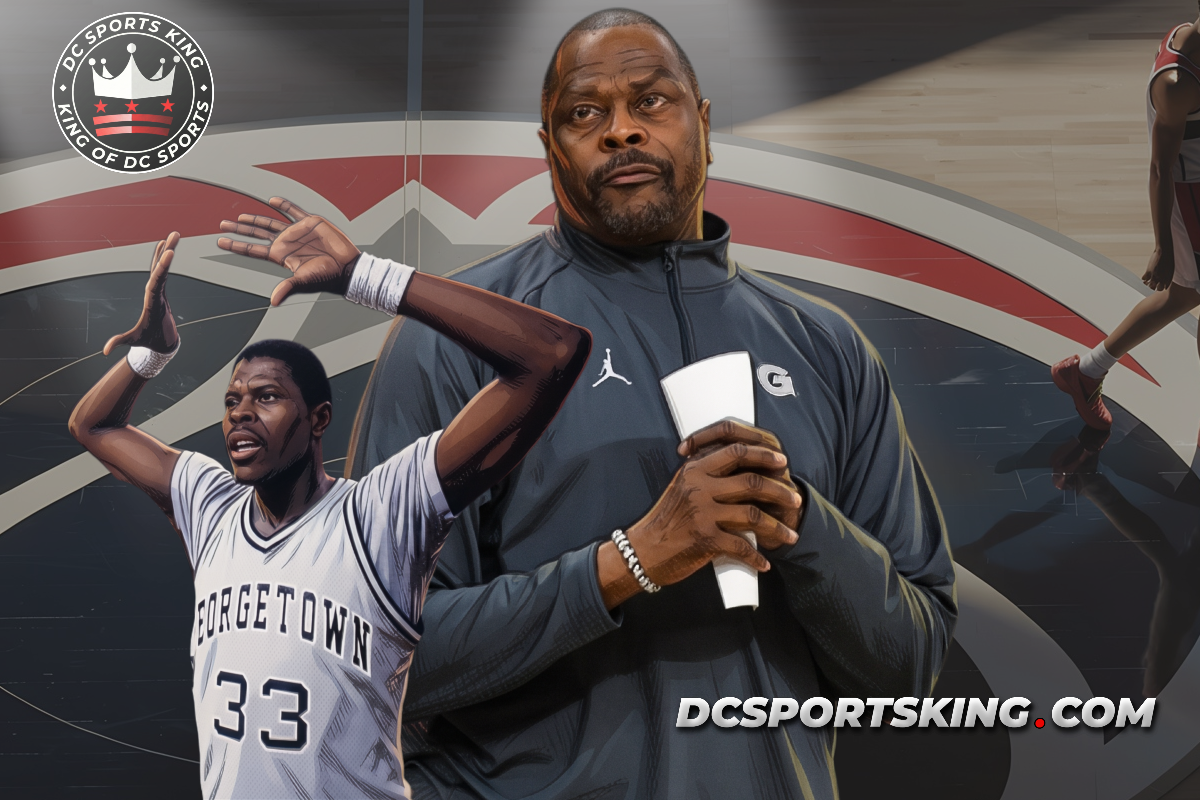
Few names command instant reverence across Washington, D.C., basketball circles quite like Patrick Ewing. Forty-two years after leading the Georgetown Hoyas to the 1984 NCAA National Championship, the Hall of Fame center is once again calling the nation’s capital home. By joining head coach Brian Keefe’s coaching staff, Ewing returns to the NBA sideline. He returns specifically to the franchise where his professional coaching journey began in the 2002–03 season.
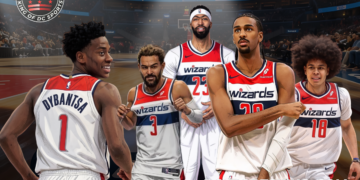
While hiring a 1990s back-to-the-basket icon might raise casual eyebrows in an era dominated by five-out spacing and perimeter launchpads, bringing Ewing into the fold constitutes a masterclass in high-leverage player development. The Wizards are assembling a fascinatingly crowded, versatile frontcourt that blends elite veteran superstars, lottery draft capital, and local blue-collar grit. Ewing’s presence establishes an immediate standard of accountability, toughness, and interior command.
Here is a look at the foundational blueprint Patrick Ewing brings to D.C. and how his daily instruction will directly fine-tune every big man in the rotation.
Full Circle in D.C.: The Coaching Blueprint
Beyond the nostalgic attraction of uniting a Georgetown legend with D.C.’s NBA franchise, Ewing brings a battle-tested coaching resume. Over 15 years as an NBA assistant across stops with the Wizards, Rockets, Magic, and Hornets. Alongside his tenure as head coach at Georgetown, he earned respect as an exacting tutor of big men.
Modern post players are asked to handle the ball, switch onto guards, and shoot perimeter jumpers. However, elite half-court execution and postseason defense still rely on unglamorous interior essentials. Ewing delivers a foundational course in three areas:
- Spatial Awareness & Verticality: Teaching bigs how to absorb contact chest-to-chest without dropping their arms or falling for perimeter pump-fakes.
- Low-Post Base Leverage: Establishing a wide, immovable lower-body base to hold the block on defense and seal position early on offense.
- Unquestioned Authority: When a film coordinator corrects a player’s positioning, it is instruction; when an 11-time All-Star and former No. 1 overall pick delivers the same critique, it carries unquestioned gravity.
The Veterans: Fine-Tuning the Anchors
While older veterans don’t need basic skill tutorials, having a Hall of Fame peer on the bench provides nuanced, high-level adjustments that standard video coordinators simply cannot replicate.
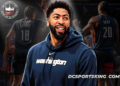
Anthony Davis: Maximizing Post Leverage and Durability
Even a perennial All-NBA forward and Defensive Player of the Year candidate can refine his interior efficiency. While AD’s face-up game and mid-range touch are elite, Ewing can focus on situational post dominance to make the game easier:
- Deep Base Sealing: Teaching AD how to wedge defenders further under the rim early in the shot clock to secure cheap, high-percentage baskets without burning excess energy on perimeter face-ups.
- Preserving the Body: Passing down subtle upper-body positioning tricks to absorb physical punishment against heavier centers, helping Davis avoid the nagging physical wear and tear of an 82-game grind.
DeAndre Ayton: Unlocking Aggression and Free Throw Rate
Ayton brings a towering 7-foot athletic frame paired with a silky mid-range touch, but he has historically settled for finesse jump shots rather than dominating the restricted area. Ewing is the ideal mentor to rewire his offensive aggression:
- Finishing Through Contact: Training Ayton to drop his shoulder and explode through rim defenders rather than fading away from physical contact.
- Accepting the Foul Line: Ewing averaged 6.5 free throw attempts per game over his career by demanding the ball inside. He can push Ayton to generate easier points by attacking mismatches as well as forcing the whistle.
The Young Core: Building the Future Pillars
For the Wizards’ emerging young towers, Ewing serves as an uncompromising instructor in footwork, angles, and defensive verticality.
Alex Sarr: Translating Speed into Spatial Dominance
As the franchise’s prized lottery foundation, Sarr possesses elite perimeter mobility and defensive recovery speed. However, his frame is still developing functional NBA strength. Ewing will help bridge the gap between raw athleticism and paint technique:
- Chest-to-Chest Rim Protection: Teaching Sarr how to absorb contact from heavier centers without dropping his arms or committing frustration fouls.
- Go-To Counter Footwork: Equipping Sarr with a reliable baseline jump hook and a direct counter drop-step so he isn’t forced to rely purely on facing up when half-court offenses tighten up.
Tristan Vukčević: Polishing Interior Defense and Rebounding
Vukčević already boasts smooth perimeter shooting and pick-and-pop offensive touch. However, to stay on the floor during high-stakes, playoff-intensity stretches, his interior toughness must match his shooting stroke:
- Defensive Box-Out Mechanics: Drilling hip leverage and early contact to clear the defensive glass against quicker, more explosive offensive rebounders.
- Drop-Coverage Timing: Fine-tuning the exact foot angles needed to contain rolling guards in pick-and-roll coverage without surrendering easy lobs behind him.
The Hometown Engine: Elevating the Motor
JuJu Reese: Sharpening the Paint-Forward Blueprint
Julian “JuJu” Reese, who built his reputation just down the road anchoring the Maryland Terrapins, brings a tireless, blue-collar motor. He crashes the boards and plays physical, paint-forward basketball. To help Reese excel in an NBA rotation on a developmental trajectory, Ewing can translate his raw physical energy into surgical interior efficiency:
- Elite Offensive Rebounding Angles: Refining Reese’s natural nose for the ball by teaching him how to read flight paths off the rim and swim-move past larger block-out defenders.
- Finishing Over NBA Length: Because Reese operates primarily in the paint without the height of a traditional towering center, Ewing can teach him to use up-and-under pump-fakes, reverse pivots, and the backboard to finish over elite rim protectors.
Frontcourt Syllabus: Quick Reference
| Player | Profile / Role | Primary Ewing Coaching Objective |
| Anthony Davis | All-NBA Superstar | Early-possession deep seals and low-impact interior efficiency. |
| DeAndre Ayton | Prime Veteran Big | Converting mid-range finesse into physical rim attacks and free throws. |
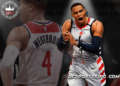
| Alex Sarr | Franchise Foundation | Defensive verticality and establishing a dependable interior jump hook. |
| Tristan Vukčević | Stretch Big | Hip-leverage rebounding mechanics and drop-coverage positioning. |
| JuJu Reese | Blue-Collar Paint Forward | Offensive glass positioning and finishing angles through NBA length. |
The Verdict for Washington
Brian Keefe’s coaching staff gains instant championship-level credibility and a dedicated interior specialist. By pairing modern pace, perimeter shooting, and positional versatility with Patrick Ewing’s uncompromising brand of paint discipline, the Wizards are guaranteeing their frontcourt won’t just be skilled. They will command respect on every single possession.