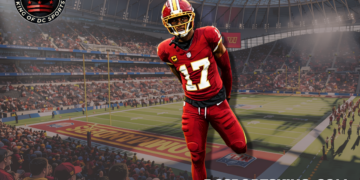






























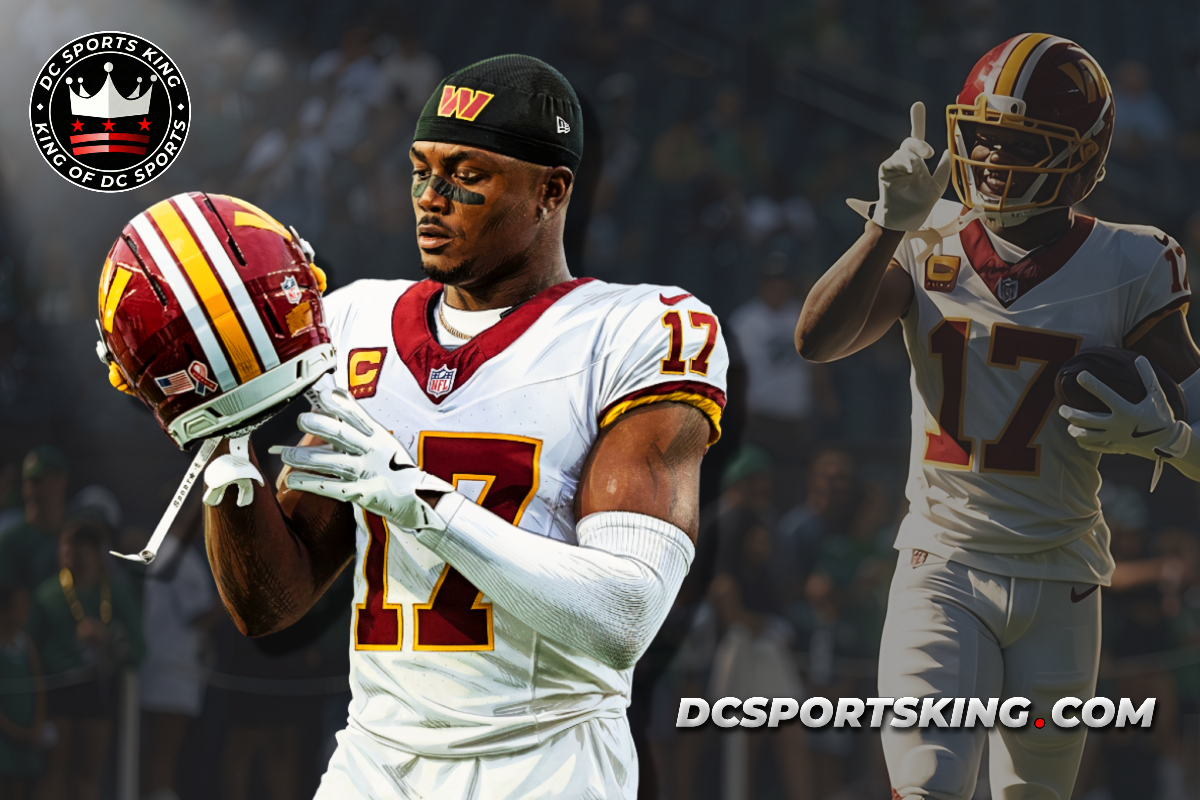
For Washington fans, it’s becoming an all-too-familiar autumn tradition. The leaves start to turn, the NFL season kicks off, and somehow, Terry McLaurin goes missing in action.
In the 2026 season opener against the Eagles, “Scary Terry” managed just two catches for 14 yards on four targets. But if you’ve been following the team closely, this isn’t a sudden drop-off. It’s a systemic trend over the last four years that has only magnified since Jayden Daniels took the reins under center.
Here is a deep dive into why McLaurin’s early-season struggles happen, the tactical hurdles standing in his way, and how the coaching staff can get their star receiver back on track.
Terry McLaurin Has a Four-Year Pattern of September Stagnation
To understand the frustration, you have to look at the track record. McLaurin’s September stat lines have consistently left fans looking for answers:
- 2023: A quiet 2 catches for 31 yards in Week 1 against the Cardinals.
- 2024 (Daniels’ Rookie Year): A dismal 39 combined receiving yards on 8 targets over the first two weeks before finally erupting with a 100-yard performance in Week 3.
- 2025: The infamous contract holdout. Missing training camp cost McLaurin roughly $800,000 in fines and, more importantly, critical live reps. Compounded by an early ankle injury, his on-field chemistry with Daniels was severely delayed.
- 2026: Another sluggish Week 1 outing against Philadelphia.
The Quinyon Mitchell Blanket and Elite Cornerbacks
The most glaring factor in Week 1 of 2026 was the opponent. When facing elite press-man cornerbacks, McLaurin’s production reliably dips. McLaurin had one target and zero catches in 22 snaps matched against Eagles top cornerback Quinyon Mitchell and newcomer Riq Woolen.
Top-caliber corners excel at taking away the boundary and disrupting a receiver’s release timing. When an elite defensive back presses McLaurin and nullifies his initial leverage, it triggers a chain reaction in the Commanders’ backfield.
Why His Game Clashes With Early-Season Rhythm
McLaurin’s specific skill set, combined with his quarterback’s playing style, creates a perfect storm for early-season lulls:
- Timing-Heavy Route Trees: McLaurin creates separation using complex, multi-breaking routes—like his signature “shake” route. These concepts require impeccable quarterback-receiver synchronicity. Without a flawless offseason to dial in that timing, it is consistently off in September.
- Deep Speed vs. Easy Touches: The offense frequently relies on McLaurin’s elite deep speed to win 50/50 boundary matchups rather than manufacturing easy underneath touches through screens or pre-snap motion.
- The Jayden Daniels Progression: Daniels is a disciplined, read-and-react quarterback. He explicitly lets the defense dictate where the ball goes. If a top corner takes away McLaurin’s primary route, Daniels instinctively checks down to his secondary options rather than forcing a low-percentage throw into tight coverage.
How OC David Blough Can Fix the Scheme
Promoted to Offensive Coordinator in 2026, David Blough faces a massive early test: scheming his best weapon open.
To get Terry McLaurin the football without forcing Daniels into bad habits, Blough needs to move beyond isolated boundary routes and start using tactical cheat codes. This means utilizing pre-snap motion to give McLaurin free releases off the line of scrimmage, moving him into the slot to exploit favorable matchups against linebackers or safeties, and manufacturing guaranteed touches through quick slants or WR screens. Blough’s play-calling must inherently force Daniels to look McLaurin’s way early in the progression before the pass rush gets home.
The Stefon Diggs and Antonio Williams Factor
The silver lining to McLaurin’s Week 1 quiet stretch is that the Commanders finally have the personnel to make defenses pay for shadow coverage.
With Jayden Daniels heavily leaning on Stefon Diggs and Antonio Williams early on, opposing defenses will soon have to make a difficult choice. Diggs brings veteran savvy and elite route-running underneath, while Williams provides dynamic playmaking that demands defensive attention.
If Diggs and Williams continue to dominate the target share, defensive coordinators will be forced to rotate their safeties toward them. The moment a defense decides to bracket Diggs or load the box to stop Williams, David Blough will have the one-on-one, single-high safety looks McLaurin needs to take the top off the defense.
McLaurin’s slow starts are frustrating, but they stem from scheme and circumstance. Once the offense uses the rest of its firepower to dictate terms to the defense, “Scary Terry” will be right back to his game-breaking ways.