



























Ever since the D.C. Council greenlit the massive $3.7 billion stadium project at the historic RFK site, sports fans across the District have been counting down the days. With infrastructure work underway and stadium construction starting next year, the countdown to the Washington Commanders’ official homecoming in 2030 has begun.
But as the renderings turn into reality, a massive question is circulating through city hall and local business circles: Is it too early for Washington, D.C., to start preparing for mega-events like the Super Bowl, the Final Four, or WrestleMania?
The short answer? Absolutely not. In fact, if the District waits until the 2030 ribbon-cutting ceremony to make its pitch, it will already be late to the party.
The Reality of the Bidding Clock
Major sporting spectacles do not operate on standard event-planning timelines; they run on multi-year bidding cycles. The NFL typically selects its Super Bowl host cities four to five years in advance. The NCAA locks in its Final Four locations years in advance, and WWE secures its multi-day WrestleMania destinations well before the rings are built.
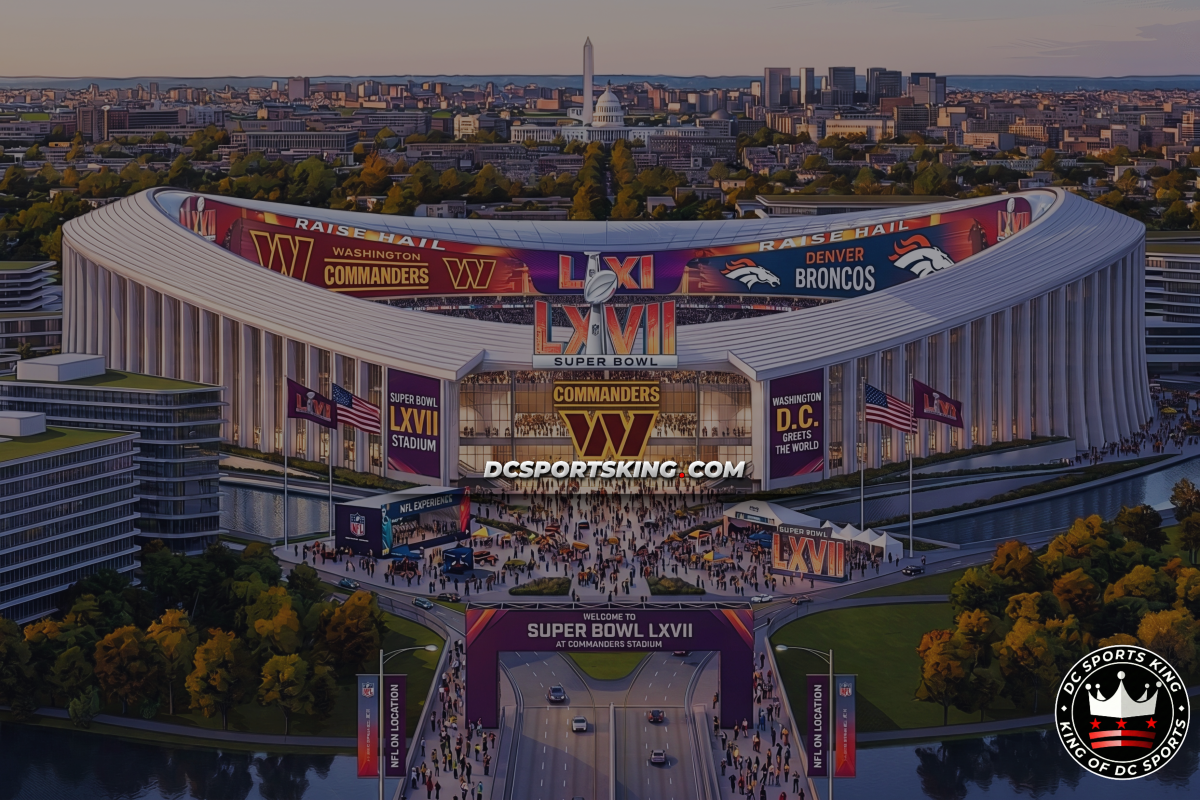
Because the new stadium is being designed by architectural firm HKS with a state-of-the-art translucent dome and a climate-controlled capacity of 70,000, it is purpose-built for these exact events. Take a look at how the design actively positions the stadium to transform the Anacostia riverfront into a national stage.
When looking at the visual layout, notice how the stadium’s western end aligns perfectly with the U.S. Capitol down East Capitol Street. This intentional inclusion in the urban fabric means D.C. isn’t just pitching a football game; it’s pitching a picture-perfect national backdrop. If city leadership wants the stadium to host Super Bowl LXV in 2031 or the Final Four in the early 2030s, those formal committee proposals, transportation logistics, and security frameworks have to be drafted well before 2030.
Counting the Cash: The Economic Impact
Hosting a mega-event is essentially a massive injection of outside capital into the local economy. Thousands of out-of-town visitors fly in, book hotel rooms, dine out, and buy merchandise, generating a rapid economic ripple impact.
Based on recent economic impact data from similar events across the country, here is what these sports spectacles could realistically bring to the District:
| Major Event | Estimated Total Economic Output | Primary Economic Drivers | Typical Visitor Volume |
| The Super Bowl | $500M to $1.2B | Luxury corporate hospitality, extensive media production spending, and elite hotel occupancy rates. | 100,000+ out-of-town visitors |
| WrestleMania | $200M to $320M | A highly international crowd, a multi-day event schedule (5-plus days of fan expos and ancillary shows) encouraging longer hotel stays. | 120,000+ total tickets sold |
| NCAA Final Four | $400M to $430M | Concentrated fan bases staying for a long weekend, high local food and beverage spending, and deep collegiate tourism support. | 70,000+ traveling fans |
A Case in Point: Look at the numbers from 2025. Super Bowl LIX in New Orleans projected a staggering $1.25 billion in total economic output, while WrestleMania 41 in Las Vegas generated over $322 million in economic activity, supporting more than 2,600 local jobs.
The Catch: Maximizing the Local Windfall
While those headline-grabbing figures look fantastic on a city press release, economists are quick to point out that a “reality check” is always necessary. A sizeable portion of mega-event revenue often “leaks” out of the city to national hotel chains, corporate flight carriers, and the sporting leagues themselves. Furthermore, hosting a massive event brings significant public expenditures, including heightened security, emergency services, and temporary transit upgrades.
To ensure the local community actually reaps the benefits, D.C. needs this four-year runway to plan defensively.
- Prioritizing Ward 7 Procurement: The city must establish a pipeline now so that local, underrepresented small businesses—particularly in the surrounding Hill East, Kingman Park, and Anacostia neighborhoods—are certified and ready to win vendor contracts for catering, staging, and transport.
- Capitalizing on the Metro Network: Unlike standard car-centric stadiums, the new RFK site is directly positioned on the Blue, Orange, and Silver Metro lines via the Stadium-Armory station. Early planning can optimize regional public transit to move 70,000 people cleanly, cutting down on gridlock and reducing the environmental footprint of a major crowd.
- Mitigating Tourist Displacement: When a Super Bowl takes over a city, ordinary tourists often stay away due to skyrocketing hotel rates. Early coordination with the hospitality sector will help balance elite event housing with regular business travel and museum tourism.
The Bottom Line
Getting ready for these events in 2026 isn’t premature—it is highly strategic. By treating the next four years as an active dress rehearsal, Washington, D.C., can build the infrastructure, establish local business networks, and draft the security frameworks required to transform a multi-billion-dollar stadium into a sustainable economic engine for the entire District.