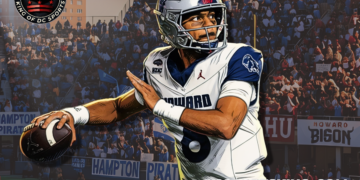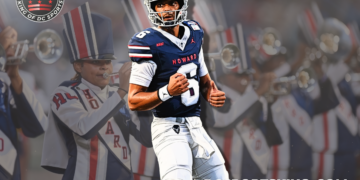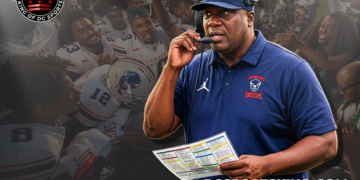


























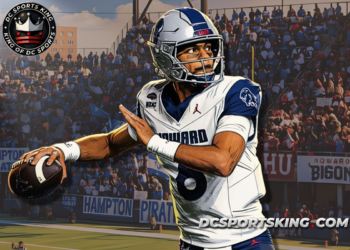

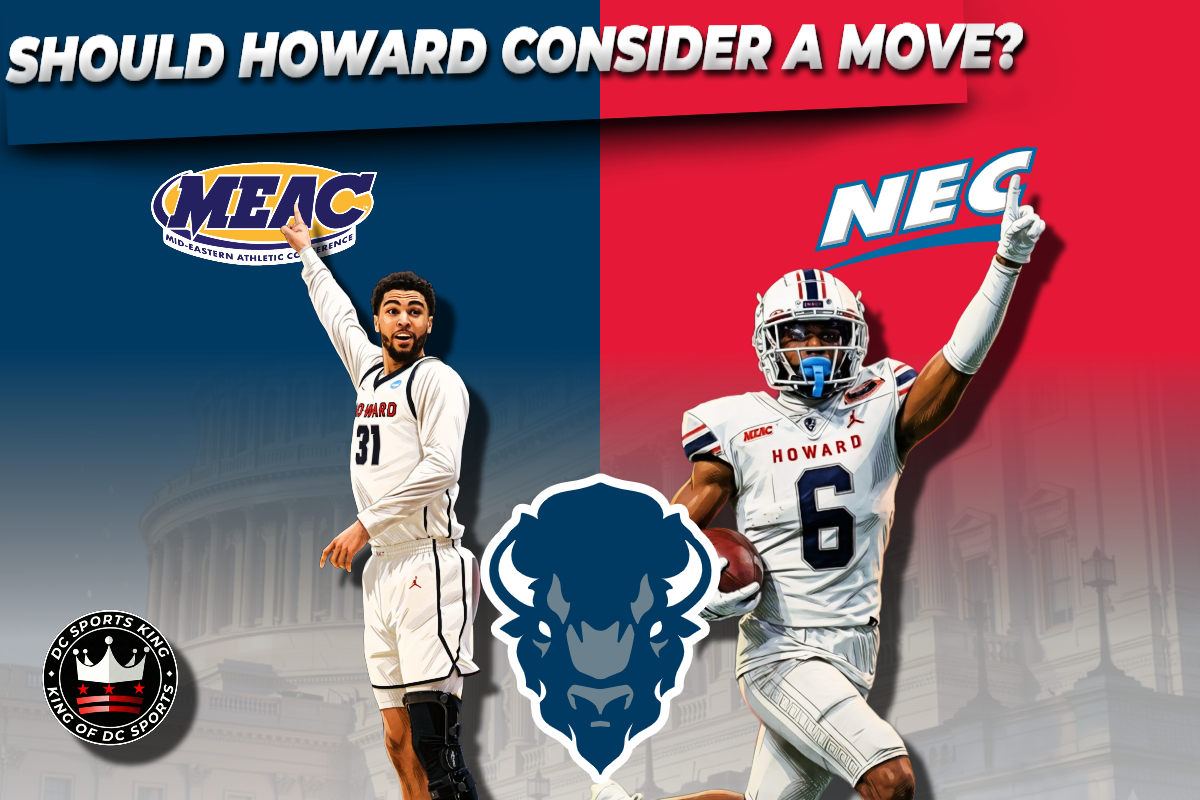
The landscape of college athletics has turned into a never-ending game of musical chairs, and the music simply refuses to stop. From the Power Four mega-conferences down to the FCS level, realignment remains the name of the game. For Howard University, a crown jewel of Historically Black Colleges and Universities (HBCUs), the question of conference identity has been a hot topic for the better part of a decade.
Currently a proud, full-time member of the Mid-Eastern Athletic Conference (MEAC), the Bison have managed a delicate balancing act by holding associate memberships in the Northeast Conference (NEC) for six of their non-revenue sports. But with MEAC football ranks remaining relatively thin and athletic travel budgets under constant national scrutiny, a burning question continues to surface: Should Howard consider packing its bags and making a full-time move to the Northeast Conference?
The CAA Flirtation: The Move That Almost Was
To understand Howard’s current position, we have to rewind a few years to the chaotic realignment wave of 2022. Back then, the Coastal Athletic Association (CAA) was aggressively expanding its footprint, poaching HBCU powerhouses North Carolina A&T and Hampton—both established members of the MEAC. Rumors swirled that Howard was the CAA’s next primary target.
And it made sense on paper. The CAA wanted to lock down the Washington, D.C., market, and Howard’s prestigious academic profile and robust alumni base would have been a major get. For a brief moment, multiple outlets reported that Howard officials were prepping for a departure that would have effectively left the MEAC on life support. However, after extensive boardroom deliberations, Howard pulled the plug on the CAA flirtation. The university ultimately chose cultural loyalty, joining the remaining MEAC schools in a pact dubbed the “Elite Eight,” pledging to stabilize their historic conference rather than bolt for the CAA’s deeper pockets.
The NEC Connection: Half In, Half Out (And Dominating)
While Howard firmly shut the door on the CAA, they quietly opened a window with the Northeast Conference. Between 2020 and 2022, Howard shifted several of its Olympic sports—men’s and women’s soccer, men’s and women’s swimming, women’s lacrosse, and golf—into the NEC as associate members.
Why? Pure logistics. The MEAC simply didn’t sponsor these sports robustly enough (or at all, in some cases), and Howard needed a regional home. The NEC, comprising schools in New York, New Jersey, Pennsylvania, Massachusetts, and Connecticut, offered a compact, I-95-friendly travel schedule that saved the Bison significant travel dollars.
But Howard hasn’t just participated as a polite regional guest; they’ve outright dominated. The Bison men’s swimming and diving team has captured multiple NEC championships, turning into an aquatic powerhouse. Similarly, the Howard golf program has hoisted multiple NEC championship trophies, proving that the athletic fit is as highly competitive as it is logistical.
Still, being “half-in” can be complicated. Running an athletic department split across two primary conferences creates administrative headaches and a fractured fan experience. Which begs the question: Is it time to go all in?
The Case for a Full-Time NEC Move
If Howard were to shift its major revenue sports—specifically basketball and football—to the NEC, the benefits would be immediate and highly practical.
- Geographic Synergy: A full-time move up the I-95 corridor perfectly suits Howard’s travel needs. Road trips to play Wagner, LIU, or Fairleigh Dickinson are much easier on student-athletes than trekking deep into the south.
- FCS Football Stability: MEAC football currently has a small pool of participating schools, resulting in a severely limited conference schedule. The NEC offers a much larger stable of football programs and an automatic bid to the FCS Playoffs.
- Academic Alignment: While some argue the Patriot League is Howard’s ultimate academic peer group, the NEC is full of solid private institutions. Howard’s elite academic reputation would immediately make it a flagship university within the conference.
The Elephant in the Room: The HBCU Legacy and Global Branding
Of course, you can’t talk about Howard leaving the MEAC without acknowledging what they’d leave behind. The MEAC isn’t merely a conference; it’s a cultural institution. Leaving the MEAC means walking away from guaranteed yearly matchups with historic HBCU rivals like Morgan State and Delaware State.
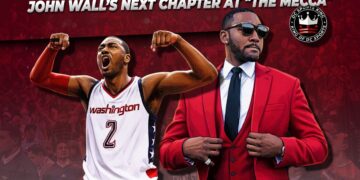
It also means shifting the narrative around an athletic brand that is currently red-hot, specifically because of its proud HBCU identity. Look no further than the university’s massive, comprehensive apparel deal with Jordan Brand, or the remarkable rebirth of the Howard golf program, which was famously funded by a seven-figure donation from NBA superstar Steph Curry. These high-profile, culture-shifting partnerships are closely connected to Howard’s status as “The Mecca” of HBCUs. Would an NEC-affiliated Howard still command that exact same cultural cachet and mainstream investment?
Furthermore, leaving the MEAC means giving up access to the Celebration Bowl. Currently, the MEAC football champion faces the SWAC champion in Atlanta on national television (ABC) in front of 30,000+ fans. It is the undisputed pinnacle of HBCU sports, offering exposure and payouts that a traditional FCS Playoff first-round game in freezing December weather simply cannot match. If Howard goes to the NEC, they trade the pomp, circumstance, and national spotlight of the Celebration Bowl for the traditional FCS bracket.
The Verdict
So, should the Bison make the leap?
From a purely logistical and administrative standpoint, consolidating all sports under the Northeast Conference umbrella is a no-brainer. It cuts costs, guarantees scheduling stability, and aligns the school with regional private institutions where Howard is already proving it can win championships.
However, college athletics isn’t just about spreadsheets; it’s about identity. The flirtation with the CAA proved that Howard values its HBCU roots immensely, and global icons like Steph Curry and Jordan Brand clearly value it too. Giving up MEAC basketball tournaments and the pursuit of the Celebration Bowl might simply be too steep a cultural price to pay. The new Black College Football Poll and All-American team are a step toward strengthening the Howard brand and its HBCU rivalries.
For now, Howard’s hybrid model—football and basketball in the MEAC, Olympic sports dominating the NEC—might actually be the Goldilocks solution. But if the winds of conference realignment start howling again, don’t be surprised if the Bison finally decide to graze full-time in the Northeast.