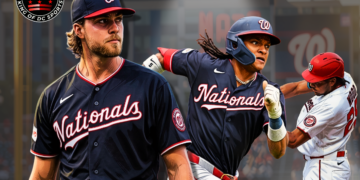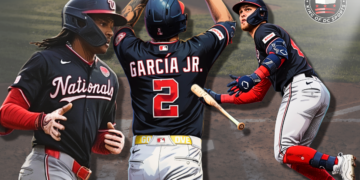






















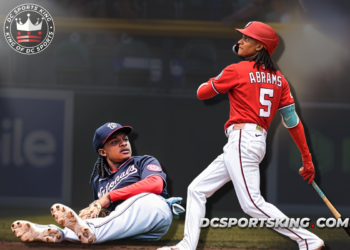










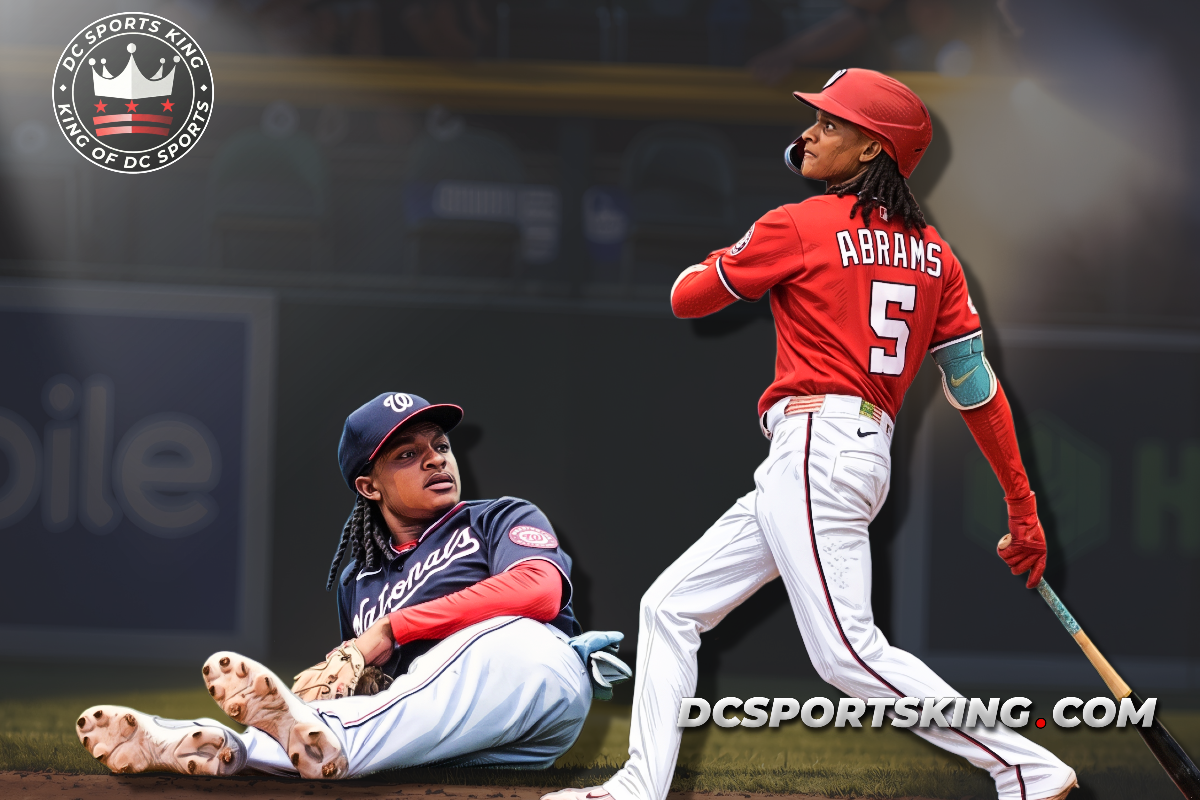
If you’ve been watching Washington baseball this season, one thing is glaringly obvious: CJ Abrams is morphing into the premier offensive shortstop in Major League Baseball. Fresh off his second All-Star selection in 2026, “The Alien” is putting together a definitive breakout campaign—driving the ball with authority, utilizing his elite speed on the basepaths, and proving that the crown jewel of the 2022 Juan Soto blockbuster trade is officially blooming into a superstar.
Yet, as his offensive profile skyrockets, a complicated narrative has developed across the DMV. Defensive growing pains at shortstop have ignited intense debate about his long-term positional fit, while a frenzy of trade rumors has left the fanbase wondering if his future lies in D.C. or elsewhere.
Here is a complete breakdown of Abrams’ offensive dominance, the defensive fixes that could unlock his ultimate form, and why the Nationals front office must reject trade offers to keep him paired with James Wood for the next era of Washington baseball.
The Offensive Juggernaut
At 25 years old, Abrams has completely leveled up his game, transforming from a top-of-the-order speedster into a legitimate, middle-of-the-order slugger. Following Friday night’s matchup against the Atlanta Braves on July 31, where he launched a solo shot to right field in the fourth inning, he continues to pace the Nationals’ offense. He now boasts 28 home runs and 83 RBIs while swiping 19 bases.
When placed side-by-side with typical major league shortstops, Abrams’ bat isn’t just above average—it’s in a tier of its own:
| Player Profile | 2026 Offensive Output | 2026 Defensive Reality |
| CJ Abrams | .289+ AVG, 28 HR, 83 RBI, .930+ OPS | -12 OAA, Below-Average Arm (83.0 mph) |
| Elite MLB SS Baseline | .280+ AVG, 20+ HR, .850+ OPS | +5 OAA or higher, Plus Arm |
| Average MLB SS | .240 AVG, 12–15 HR, .720 OPS | 0 OAA, Average Range |
His vastly improved plate discipline and exit velocity have turned routine contact into high-caliber damage, making him a matchup nightmare for opposing pitching staffs.
The Defensive Dilemma & The Positional Fix
While his bat carries the lineup, the glove remains a work in progress at a demanding premium position. Abrams currently sits at -12 Outs Above Average (OAA) for the season. Routine grounders can look labored, and his arm strength (averaging around 83.0 mph) hasn’t consistently compensated for range limitations.
Rather than viewing this as a failure, the Nationals should treat it as a prime opportunity to maximize his long-term value through a position change:
- The Second Base Solution: Shifting Abrams to the right side of the infield drastically shortens throwing distances. This masks his inconsistencies in arm strength and allows his lightning-quick footwork to excel on short-range plays, turning a defensive drag into a neutral or positive asset.
- The Center Field Wildcard: Transitioning him to the outfield would allow him to tap into his 80-grade sprint speed across wide territory. Covering outfield grass neutralizes his infield throwing mechanics, mirroring positional transitions that have successfully salvaged high-end bats across the league.
Trade Speculation vs. Reality: Toboni’s Standpoint
Because Abrams is under team control through 2028 and producing MVP-caliber offensive numbers, rival front offices have taken notice. Contenders like the New York Yankees and Milwaukee Brewers are actively circling ahead of the deadline, desperate for a franchise-altering bat.
Media chatter accelerated following comments from Nationals President of Baseball Operations Paul Toboni. While Toboni made it clear the front office isn’t actively seeking a deal, he acknowledged standard front-office due diligence:
“It’s not like we are calling other teams and looking to trade CJ… While we’ll always listen, we’re going to take it day-by-day.”
Toboni also stressed his belief in Abrams’ untapped ceiling, adding that the organization sees “another gear” in his development and expects him to remain a core piece of the infield moving forward.
Holding the Line: Building Around Abrams and James Wood
Listening to trade inquiries is standard practice, but executing a trade would be a monumental step backward. The Nationals are turning a corner, and trading away a 25-year-old superstar in his prime makes zero sense for a team entering its next contention window.
That window is arriving right now, anchored by two-time All-Star James Wood. Now in his third big-league season, Wood is terrorizing opposing pitchers with 30 home runs this year. Keeping this dynamic duo intact gives Washington a terrifying core for years to come:
- The Table-Setter and the Slugger: With Wood setting the tone in the leadoff spot and Abrams waiting in the cleanup hole, the Nationals have built a devastating offensive loop. Wood’s ability to get on base and create early chaos forces pitchers into high-stress situations, setting the perfect stage for Abrams to capitalize and drive him in with his elite slugging.
- Timeline Alignment: Both core pieces are young, highly controllable, and entering their prime production windows simultaneously.
Whether CJ Abrams is turning double plays at second base or tracking down line drives in center field, one thing is certain: he is a cornerstone player, and he belongs in D.C. wearing a curly W for the long haul.