




































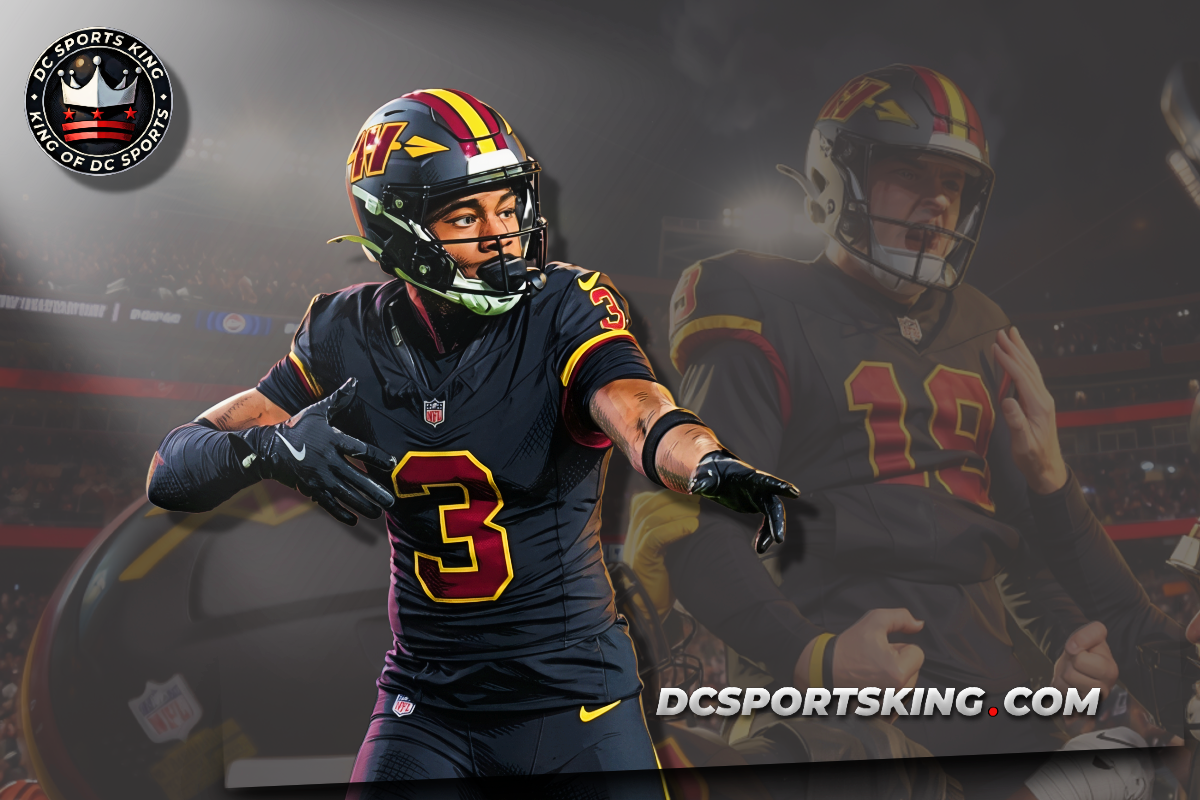
When the Washington Commanders brought in veteran wide receiver Stefon Diggs, everyone knew the package deal that came with him. You get a four-time Pro Bowler with elite route-running polish, and you get a fiery, unfiltered competitor who wears every ounce of his frustration on his sleeve. On Monday Night Football against the AFC North-leading Cincinnati Bengals, Washington saw both sides of the Stefon Diggs experience, and it directly fueled a thrilling 22-20 walk-off victory. From a viral second-quarter sideline outburst that jolted a stagnant offense awake to a split-second, heads-up play on the game-winning drive that has the entire NFL talking, Diggs proved that leadership in the NFL doesn’t always look polite.
The Sideline Outburst That Woke Up Washington
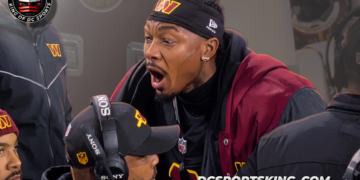
For the first 28 minutes of Monday night’s contest, the Commanders’ offense looked completely stuck in the mud. Quarterback Jayden Daniels had completed just four of six passes for a measly 24 yards, and Diggs hadn’t seen a single target. After Daniels took another drive-killing sack in the second quarter, ESPN cameras caught Diggs erupting near the bench, visibly yelling to “throw the f—ing ball!” before an assistant coach stepped in to cool things down.
Naturally, the national media’s knee-jerk reaction was predictable. Critics immediately slapped the “diva” label back on the 12-year veteran. Even Peyton Manning chimed in on the ManningCast, noting that a public display like that would have made him hesitant to look Diggs’ way.
That take completely misses the context of what actually happened next. Head coach Dan Quinn brushed the moment off as competitive fire, and Daniels responded like a franchise quarterback. On the very next possession, Daniels targeted Diggs twice and marched Washington downfield for a crucial touchdown, cutting Cincinnati’s lead to 10-7 right before halftime. From that moment on, the Commanders’ offense flipped a switch, scoring on every remaining drive. Sometimes a young quarterback and a sputtering unit don’t need a quiet pat on the back; they need a veteran demanding urgency.
Beyond the Box Score: Situational Awareness Under Pressure
If you only glance at the final stat sheet, Diggs’ night looks modest: four catches on six targets for 45 yards. After his season-high 83-yard, game-winning touchdown against the New York Giants, Monday night belonged to third-round rookie Antonio Williams in the box score, who exploded for nine receptions and 122 yards.
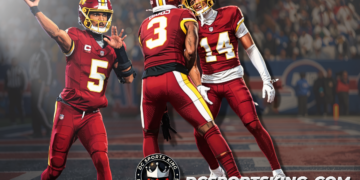
Yet, with 46 seconds left on the clock, zero timeouts, and Washington trailing 20-19, Diggs’ veteran instincts took center stage. After Daniels connected with Williams for 22 yards to cross midfield, the quarterback found his rookie again for a massive 42-yard catch-and-run down to the Cincinnati 8-yard line.
That’s when the play of the night—and the internet’s hottest debate—happened. With roughly 12 seconds remaining and no timeouts left to stop the clock, Williams was still fighting for extra yards near the 8. Suddenly, Diggs collided with his own teammate, sending Williams immediately to the turf.
Genius Clock Management or Happy Accident?
Social media instantly split into two camps. One side argued Diggs whiffed on a downfield block against a Bengals defender and inadvertently clipped Williams. The other side saw something rarely witnessed at any level of football: a seasoned veteran recognizing the clock math in real time and physically bringing his rookie teammate down to save the game.
Look at the logistics of that final sequence. Had Williams kept fighting through contact for another three or four seconds near the 2-yard line, Washington’s offensive linemen would have had to sprint even further downfield to get set. With no timeouts, every single tick mattered. Because Williams hit the turf quickly, the Commanders hustled to the line, Daniels spiked the ball with roughly four seconds to spare, and rookie kicker Drew Stevens drilled his fifth field goal of the night; a 26-yard walk-off winner.
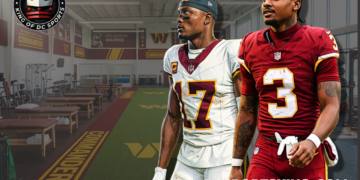
Neither Diggs, Williams, Daniels, nor Quinn has publicly confirmed whether the collision was intentional. Honestly, the intent almost takes a backseat to the situational awareness Diggs brings to this roster. With Terry McLaurin sidelined on injured reserve for the rest of the year, Diggs has stepped into the role of the offense’s emotional engine. He didn’t pout when Williams became the primary read down the stretch; he was sprinting downfield to make a play, putting himself in position to help Washington close out its third win in four games and move to 4-5-1.
The New Identity of Washington’s Offense
Winning in the NFL requires talent, but winning ugly, high-pressure games in primetime requires an edge. Stefon Diggs gave the Commanders that exact edge on Monday night. He challenged his quarterback when the offense was sleepwalking, and he was right in the middle of the chaos when the game was on the line with seconds left. Critics can debate his sideline demeanor all week, but in Washington’s locker room, the results speak for themselves.