




























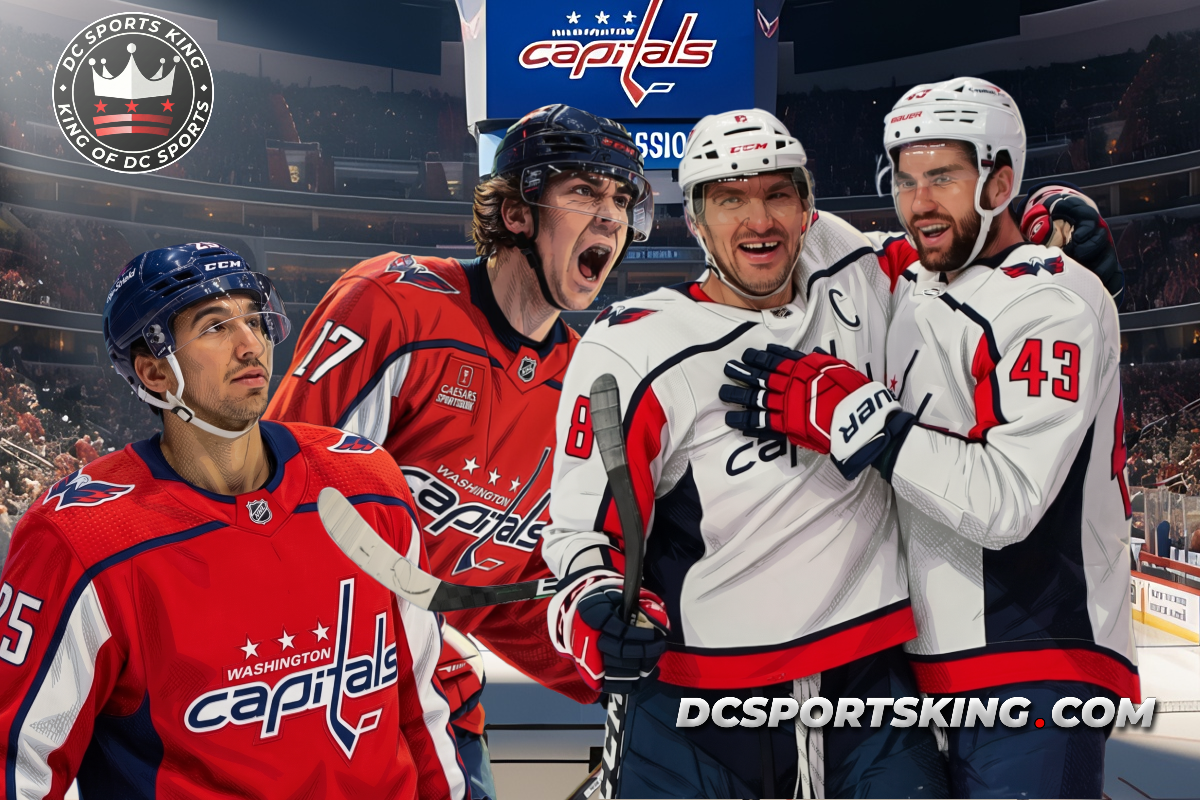
Head coach Spencer Carbery has made no secret of what his offensive system lacked during his first two seasons behind the bench: an elite, game-breaking talent who can single-handedly shatter defensive structures off the rush. Washington’s offense too regularly depended on grinding out cycle shifts and scoring by committee, keeping them vulnerable to crushing 5-on-5 scoring droughts.
By dropping Jordan Kyrou into the top six, Carbery completely reshapes the offensive hierarchy. But this blockbuster maneuver doesn’t happen in a vacuum—it arrives right as the franchise faces its ultimate existential variable: the uncertain future of Alex Ovechkin.
Whether the captain decides to walk away into retirement this July or return on a one-year deal for one final, historic sprint, Kyrou’s elite speed and vision serve as the ultimate tactical bridge. Here is how the Capitals’ forward deployment breaks down, how an aging Ovechkin fits into the puzzle if he returns, and who stands to benefit most.
Projected Top-Six Forward Combinations
With Connor McMichael heading to St. Louis and Pierre-Luc Dubois preparing for his eventual return from a fractured hand, Carbery can construct two highly complementary, specialized scoring lines.
Line 1: The High-Octane Rush Unit
Alex Ovechkin (LW) — Dylan Strome (C) — Jordan Kyrou (RW)*
- Deployment & Role: This serves as Washington’s undisputed primary scoring line, built entirely around maximizing neutral-zone entries and high-danger slot opportunities.
- The Ovechkin Variable: If Ovechkin signs a one-year extension to capture Gretzky’s combined record, this line is constructed for absolute physical preservation. At this stage in his career, Ovechkin cannot lug the puck 200 feet. Instead of forcing him or a slower-skating distributor to pass through a clogged neutral zone, Kyrou assumes 100% of the transition duties. His blazing entry speed forces opposing defensemen to immediately back off to protect the blue line. That sudden defensive retreat creates acres of trailing ice for Ovechkin to glide into his lethal shooting pockets completely unchallenged.
- Retirement Contingency: If Ovechkin decides to hang up his skates, Kyrou instantly pivots from “elite facilitator” to the essential offensive engine of the top line, allowing a dynamic young bull like Ryan Leonard to step into the top-six LW spot without drowning in primary creation responsibilities.
Line 2: The Heavy Two-Way Possession Unit
Aliaksei Protas / Anthony Beauvillier (LW) — Pierre-Luc Dubois (C) — Tom Wilson (RW)
- Deployment & Role: A heavy, physically punishing north-south possession line designed to grind down opponents below the goal line and dominate expected goals share.
- Tactical Synergy: By establishing Tom Wilson as a permanent, locked-in mainstay on the right side, Carbery creates an absolute nightmare matchup. Flanking a returning Pierre-Luc Dubois with a massive, 6-foot-6 play-extender in Aliaksei Protas and a bruising top-six fixture in Wilson constructs a 200-foot physical wall. Putting Kyrou on the top unit shields Dubois from having to carry the primary offensive creation load. Instead, this trio can play a straightforward, downhill power game engineered to punish softer defensive pairings.
The Biggest Beneficiaries
Adding a perennial 70-point threat with world-class wheels creates a massive domino effect across the entire roster. Three individuals experience an immediate, quantifiable upgrade:
1. Alex Ovechkin (The Chase for Gretzky’s Combined 1,016 Record)
At this stage in his pursuit of absolute NHL immortality, Ovechkin is chasing Wayne Gretzky’s combined regular-season and playoff record of 1,016 goals. Sitting at 1,001 total career goals, he needs just 15 more to own the combined crown. To get there, his absolute best asset is his stationary one-timer and high-slot release—not his ability to lug the puck 200 feet. Last season, opposing defensemen frequently stood up aggressively at the blue line against Washington’s top unit because they didn’t respect their entry speed. Kyrou possesses wheels comparable to the league’s most dangerous rush threats. Opponents will be forced to play passive gap control against Kyrou’s side, opening up wide-open cross-ice passing lanes directly to Ovechkin’s tape. If Ovi plays, Kyrou secures him the combined record; if Ovi retires, Kyrou cushions the systemic blow.
2. Dylan Strome (The Tactical Facilitator)
Strome has quietly developed into a premier NHL pass-first center, but he has desperately needed a linemate who can blow past flat-footed defenders. Last year, Strome had to act as both the primary facilitator and the main possession driver. With Kyrou constantly stretching the ice vertically and pulling coverage toward the right half-wall, Strome will find massive seams through the middle of the ice. Expect Strome’s primary assist rate to experience a dramatic spike.
3. Pierre-Luc Dubois (Matchup Exploitation)
When Dubois returns to the lineup alongside a permanent top-six anchor in Wilson, opposing coaches will face a massive tactical dilemma. Do they deploy their shutdown defensive pairing against the Ovechkin-Strome-Kyrou buzzsaw, or do they assign them to contain the bruising, 6-foot-4-plus bash brothers on the second line? Because the top line commands top-tier defensive attention, Dubois and Wilson will feast on second- and third-pairing defenders at 5-on-5.
Reconfiguring Power Play 1
Beyond 5-on-5 play, Kyrou instantly upgrades Washington’s primary man-advantage unit. He provides Spencer Carbery with a dynamic right-handed shot on the left flank or high bumper position, ideally balancing the umbrella:
| Position | Player | Primary Tactical Assignment |
| Left Circle | Alex Ovechkin* | Primary one-timer option; pulls penalty kill coverage |
| Right Flank | Jordan Kyrou | Secondary downhill shooter; cross-ice seam passer |
| Net Front | Tom Wilson | Screen, tip, and high-danger rebound retrieval |
| Bumper / Slot | Dylan Strome | Quick-touch distributor; low-slot support |
| Point (QB) | Jakob Chychrun | Blue-line distributor; heavy secondary slap shot |
If Ovechkin opts for retirement, Kyrou seamlessly slides over to the “office” in the left circle as the primary downhill shooter, while Aliaksei Protas or Ryan Leonard steps in to absorb the net-front/bumper utility roles.