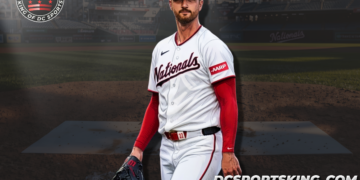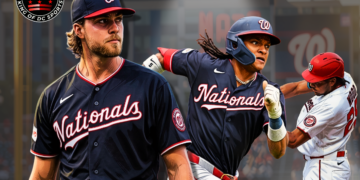























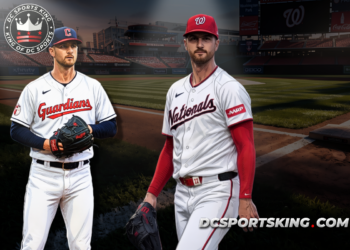









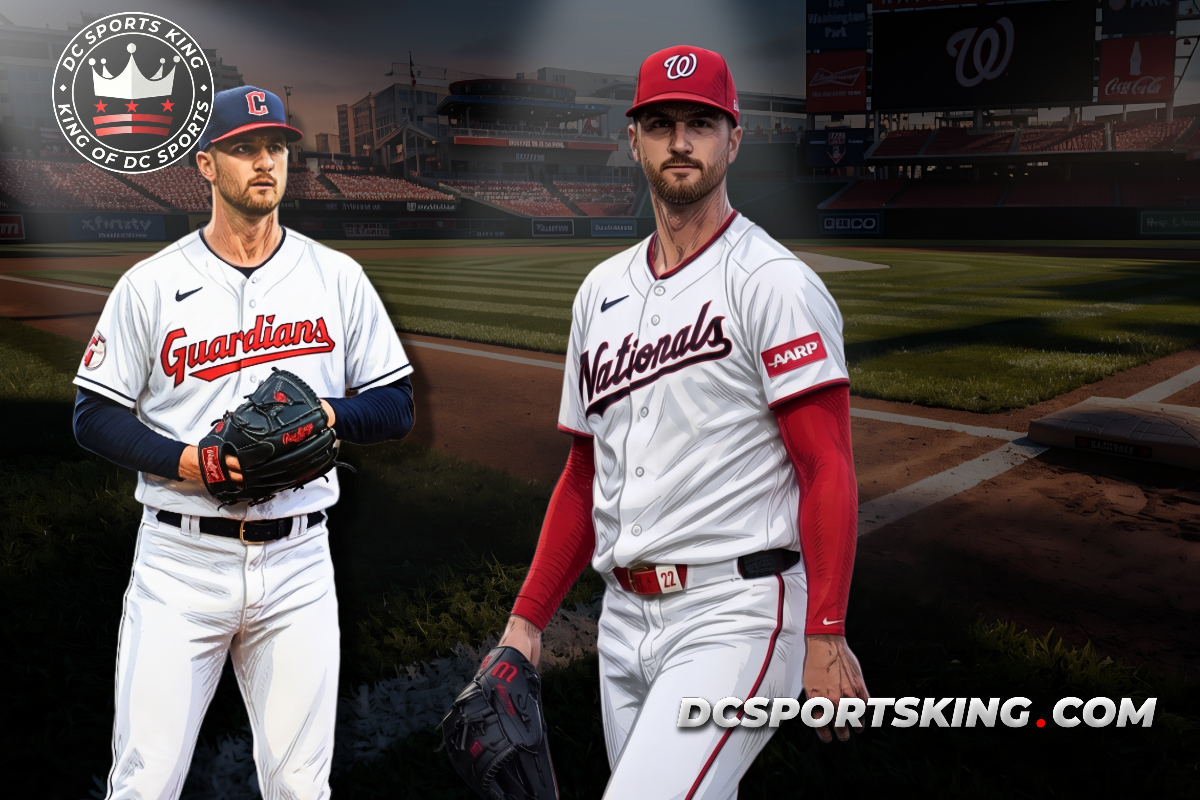
Minutes before the clock sounded on Monday’s trade deadline, the Washington Nationals pulled the trigger on a buzzer-beater. They shipped left-hander and 2026 All-Star Foster Griffin to the Cleveland Guardians.
While it is always tough to say goodbye to a fan favorite having a career year, analyzing the numbers reveals an exemplary display of asset management by the Nationals’ front office. Washington took a massive gamble on a pitcher rebuilding his career overseas, struck gold, and cashed out at the absolute peak of his value.
The NPB Gamble
To understand why this trade is such a win for Washington, you have to look at where Foster Griffin was just a few years ago. A former 2014 first-round pick by the Kansas City Royals, Griffin had practically fallen off the major league radar. Between 2020 and 2022, he pitched a combined eight innings in the big leagues.
Needing a career reset, Griffin took his talents to Japan, spending three seasons in the NPB to rebuild his mechanics, confidence, and value. When the Nationals signed him last winter to a one-year, $5.5 million contract, it was viewed as a low-risk depth move. Instead, it became the ultimate flip.
The Unlikely All-Star
Nobody could have predicted what Griffin would do in a Nationals uniform. The 31-year-old rookie returned stateside and dominated.
Over 22 starts, Griffin accumulated a 12-3 record with a sparkling 3.06 ERA. He logged 129.1 innings, struck out 116 batters, and earned his first career All-Star nod. For a team hovering around the Wild Card race for most of the summer, Griffin was an unquestionable bright spot and an anchoring presence in the rotation.
The Reality Check: Why Selling Was Smart
As much as Griffin meant to the 2026 Nationals, holding onto him past August 3rd would have been a sentimental mistake rather than a logical baseball decision. Here is why the front office was incredibly smart to cash in:
- Age and Contract: Griffin is 31 years old and set to become an unrestricted free agent at the end of the season. The Nationals were unsuccessful with reaching terms on an extension as the trade deadline loomed.
- Surface Stats vs. Underlying Metrics: While his 3.06 ERA is elite, some underlying metrics (like a FIP hovering near 4.00 earlier in the summer) suggested he might be over-performing and selling high before any potential regression was crucial.
- The Wild Card Skid: The Nationals limped into the final week of July, losing 6 of 7 games, including a brutal four-game sweep by the Braves. That skid clarified their position on the deadline: it was time to sell.
The Haul
By recognizing Griffin as a depreciating asset for their specific timeline, Washington managed to turn a $5.5 million one-year deal into four intriguing minor-league prospects from Cleveland’s farm system:
- OF Nick Mitchell: A scrappy, contact-first Double-A outfielder with plus speed who adds positional diversity to the return.
- LHP Josh Hartle: The centerpiece of the deal, Hartle is a Double-A left-hander ranked as the Guardians’ No. 25 prospect. He offers high-floor rotation potential with advanced command.
- LHP Will Dion: A Triple-A southpaw who provides near-immediate pitching depth for the upper levels of Washington’s minor-league system.
- RHP Kendeglys Virguez: A live-armed relief prospect who has split time between High-A and Double-A this season, adding bullpen upside.
The Nationals capitalized on a desperate contender looking to bolster their rotation. They secured four controllable assets for a player who, just eight months ago, wasn’t even on a major league roster.
Washington fans may miss watching Griffin paint the corners every fifth day. Still, the front office just gave a clinic on how to find market inefficiencies, invest wisely, and know exactly when to walk away from the table.