


































For his first two seasons in Washington, head coach Dan Quinn opted for a week-to-week approach to naming game captains. The method was meant to promote broad leadership, evaluate the locker room dynamically, and let different players step up on game day. However, ahead of the 2026 season, the Commanders pivoted from that philosophy, cementing five players as season-long captains, and setting a definitive, uncompromising culture in the process.
The Transition from Weekly to Permanent
The shift away from rotating captains speaks volumes about where the franchise stands in its development under Quinn. When a coaching staff relies on weekly captains, it commonly signals an ongoing search for a team’s core identity. It requires players to earn the honor incrementally, which can be an effective motivational tool for a rebuilding roster.
However, rotating the “C” patch can also obscure the natural hierarchy of a locker room. By moving to permanent captains, Washington acknowledges that the roster has matured past the need for weekly leadership auditions. The players voted for these roles, meaning the coaching staff is empowering the locker room to identify its own standard-bearers. The result is a cohesive front where the undisputed voices are clearly recognized every day, not just on Sundays.
Defining the Locker Room Culture
Naming permanent captains removes ambiguity. When adversity strikes during a grueling regular season, players do not need to look around to see who is leading the charge for that specific week; the leadership is already institutionalized.
Quinn noted that the five players selected as captains were chosen not simply for their talent, but because they represent the standard of what the franchise wants to be. A permanent captaincy demands consistency. It requires the selected players to walk the walk in meetings, during practice, and in the community. It effectively makes them extensions of the coaching staff. This move signals a transition from building a culture to enforcing an established one.
The Standard-Bearers
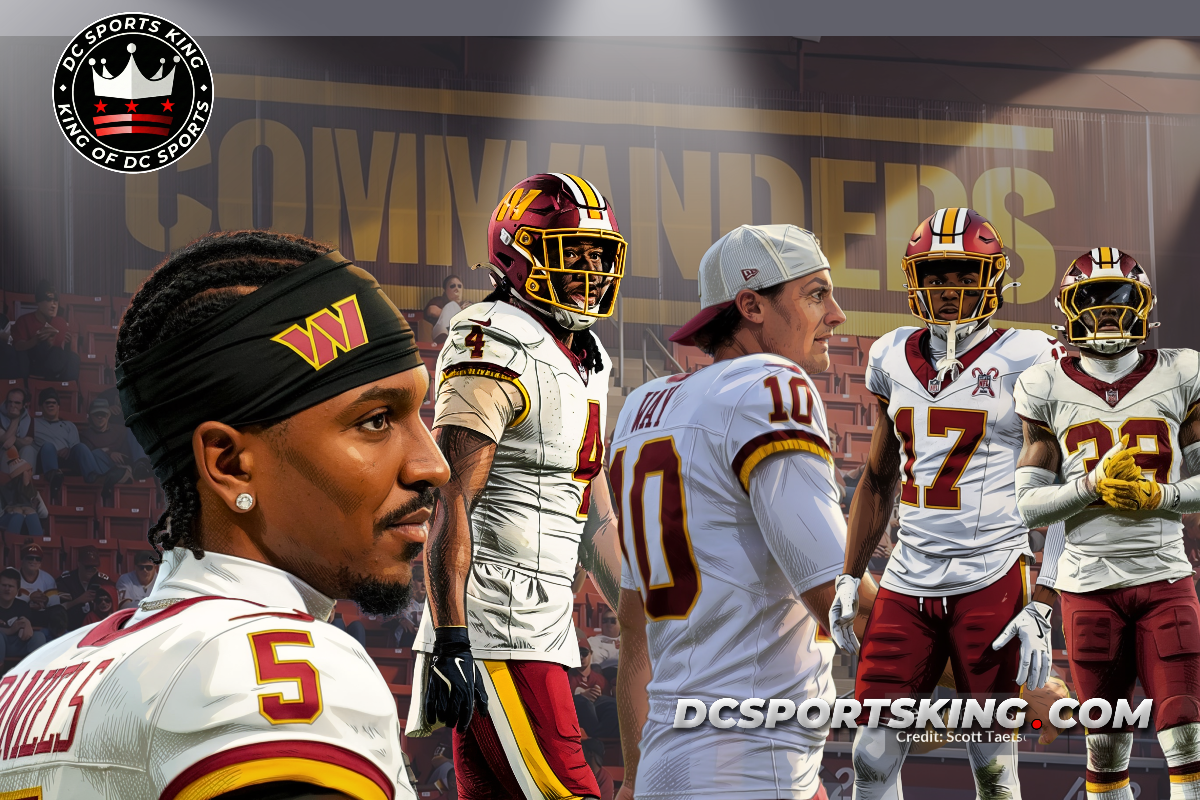
The five players selected by the locker room reflect exactly what the organization values:
- Jayden Daniels (Offense): Named a season-long captain for the first time in his career, the third-year quarterback’s selection signifies total command of the offense and the unquestioned trust of his teammates.
- Terry McLaurin (Offense): Voted a captain for the fifth time, McLaurin remains the consummate professional, providing elite production on the field while serving as a vital mentor to younger receivers.
- Frankie Luvu (Defense): Known for his relentless motor, Luvu brings an infectious energy and a serious, film-study-driven approach that elevates the entire defensive unit.
- Jeremy Reaves (Defense/Special Teams): A former All-Pro who carved out a role on defense through elite communication skills, Reaves embodies the resilience and high standards the coaching staff preaches.
- Tress Way (Special Teams): The longest-tenured player on the roster, Way continues his role as an emotional anchor and steadying veteran presence.
By locking in these five “heavy hitters,” as Quinn referred to them, the Washington Commanders have drawn a hard line on accountability. The culture is no longer in a state of evaluation; it has officially been defined.