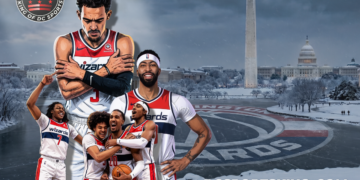






























In modern sports analytics, front offices dedicate extensive resources to identifying championship pedigrees and evaluating the developmental trees of elite coaching staffs. Yet, one of the most enduring statistical probabilities in the NBA over the past two decades has nothing to do with draft efficiency or salary cap management. It involves a single rebuilding franchise.
Since 2009, every single NBA Finals has featured at least one former member of the Washington Wizards on an active roster.
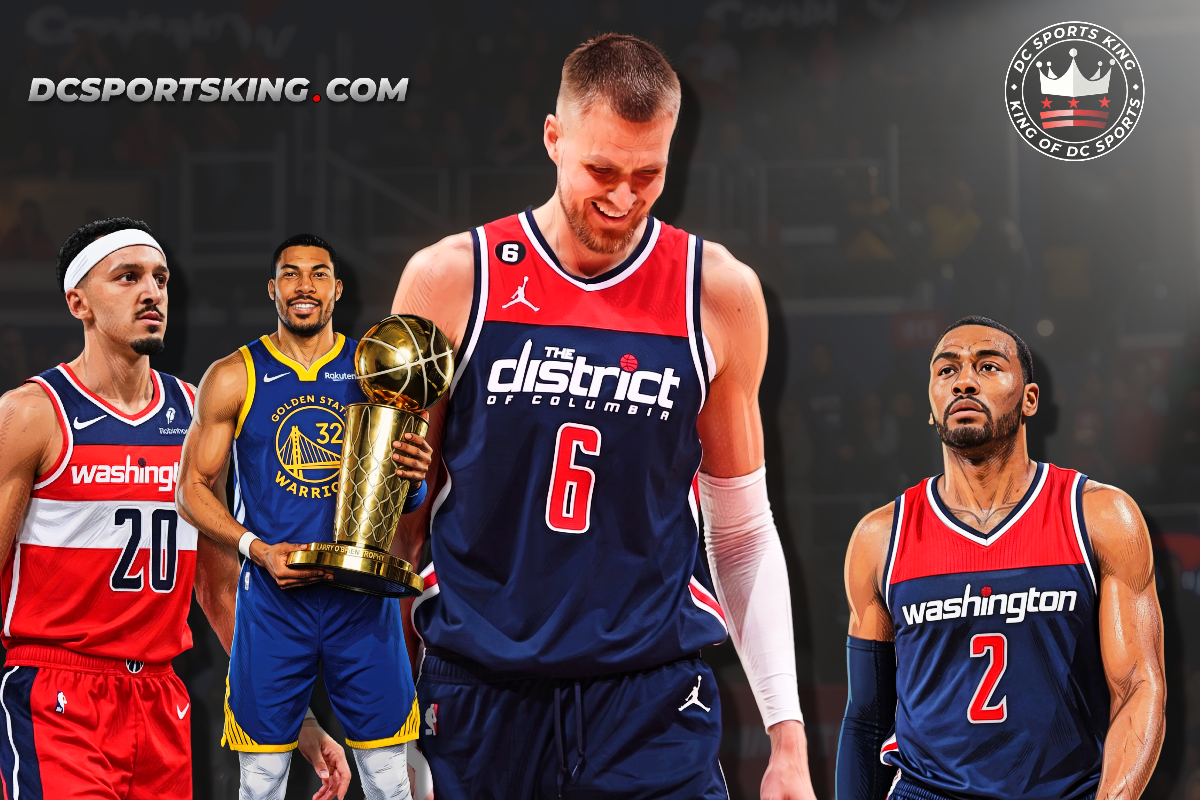
With the New York Knicks securing their place in the 2026 NBA Finals, the streak has officially extended to an unprecedented 18 consecutive years. Depth pieces like Landry Shamet and Dillon Jones have ensured that Washington’s footprint remains visible on the league’s ultimate stage. For sports analysts and roster architects, this quirk presents a fascinating case study in asset liquidity, player development, and the modern NBA lifecycle.
Tracking the 18-Year Roster Trend
To understand the scope of this statistical anomaly, it is helpful to categorize the streak by the dominant eras of recent NBA history. Rather than a singular anomaly, the steady supply of Washington alumni mirrors broader league trends in roster construction.
The Genesis
2009 – 2010
Tyronn Lue sneaks onto the Orlando Magic roster in ’09. The very next year, Rasheed Wallace (who spent his rookie year as a Washington Bullet back in 1995-96) plays a massive role for the 2010 Boston Celtics.
The Heatles Era
2011 – 2014
Juwan Howard and Mike Miller become the ultimate good-luck charms for LeBron James and the Miami Heat, ensuring the streak cruises through the early 2010s alongside Rashard Lewis.
The Warriors Dynasty
2015 – 2018
Shaun Livingston revives his career and wins multiple rings with Golden State, later joined by former D.C. fan favorites JaVale McGee and Nick “Swaggy P” Young.
The Bubble & Beyond
2019 – 2023
A mass migration occurs. Everyone from Jodie Meeks (Raptors) to Dwight Howard and Markieff Morris (Lakers), Bobby Portis (Bucks), and Otto Porter Jr. (Warriors) grabs a ring immediately after leaving D.C. The 2023 Nuggets alone boasted four former Wizards (KCP, Jeff Green, Thomas Bryant, Ish Smith).
The Modern Era
2024 – 2026
Kristaps Porzingis wins it all with Boston in 2024. In 2025, the streak survived with Thomas Bryant and Quenton Jackson reaching while with the Indiana Pacers. Now in 2026, the Knicks’ deep run preserves the magic for year 18.
Market Mechanisms Driving the Trend
At first glance, it appears statistically improbable that a franchise with minimal playoff success over the last two decades could routinely supply the league’s elite with necessary personnel. However, from a sports business perspective, this outcome is the logical result of three distinct market mechanisms:
- The Buyout and Trade Deadline Ecosystem: Rebuilding franchises frequently serve as clearinghouses for veteran talent. High-caliber veterans on short-term contracts are often traded for future draft capital or bought out post-deadline, allowing them to migrate directly to top-seeded teams seeking immediate playoff depth.
- Context-Dependent Development: Washington has historically drafted players with elite physical profiles and raw traits (e.g., JaVale McGee, Otto Porter Jr.). While these players may struggle to function as primary options on developing rosters, their distinct skill sets often thrive when integrated into the structured, highly defined roles of a championship system.
- The Journeyman Probability Factor: The modern NBA features a robust class of rotational journeymen. Because these players cycle through multiple franchises over a 10-to-15-year career, the sheer volume of personnel passing through Washington’s system creates a high mathematical probability that at least one will land on a Conference Finals roster.
A Notable Sub-Streak: The anomaly goes beyond mere appearances. From 2017 to 2024, a former Washington Wizard did not just play in the Finals—they won the NBA Championship for eight consecutive seasons. This sub-streak was finally broken in 2025 when the Oklahoma City Thunder defeated the Indiana Pacers.
Strategic Takeaways for Front Offices
The “Wizards Anomaly” is more than a trivial footnote; it underscores a fundamental reality of modern NBA roster construction. Talent is heavily dependent on organizational context.
A player who appears inefficient or overpaid on a lottery-bound roster can become a high-value asset when placed next to MVP-caliber playmakers and elite defensive structures. As the league continues to navigate stringent luxury tax aprons, front offices will increasingly need to look toward struggling franchises to identify the undervalued role players who can complete a championship puzzle.