







































In the heat of competition, emotions run high, adrenaline takes the wheel, and the filter between brain and mouth can vanish in a millisecond. But in professional sports, words carry weight far beyond the foul lines—and Washington Nationals right-hander Cade Cavalli received a crash course in that reality.
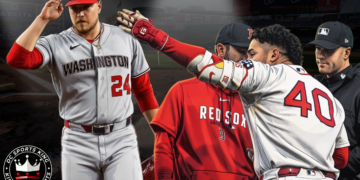
During Washington’s commanding 8-1 victory Tuesday over the Boston Red Sox, a full-count strikeout of Willson Contreras in the fourth inning ignited fireworks. After freezing Contreras looking, Cavalli let out a fiery taunt that reverberated way past the dugout: “Sit down, boy!”
Contreras immediately snapped back with an “Are you talking to me?” before charging the mound and attempting to launch his helmet into the fray. The ensuing benches-clearing scrum resulted in four ejections, including Contreras and Nationals veteran Miles Mikolas. But once the dust settled and the adrenaline faded, the real story wasn’t the scuffle—it was the three-letter word at the center of it and how Cavalli handled the aftermath.
The Heavy History Behind a Simple Word
To the casual observer who grew up chirping friends on a basketball court or playing backyard wiffle ball, “boy” might feel like standard, run-of-the-mill trash talk. Cavalli himself admitted that it was his frame of reference when the phrase slipped out.
However, context is everything. In the United States, directing the word “boy” at a non-white individual carries a deeply rooted, racially charged history. While Contreras—a Venezuelan-born veteran—demurred when asked postgame if he felt a racial element was intended, the public perception immediately shifted toward the historical undertones of the phrase.
When you wear the Washington Nationals script across your chest, you represent one of the most diverse, historically rich, and culturally proud Black cities in America. Words matter, intention versus impact matters, and athletes don’t exist in a vacuum.
A Sleepless Night and a Sincere Apology
In modern sports journalism, post-scandal apologies often feel like they were run through a corporate PR car wash: stiff, defensive, and littered with “I’m sorry if anyone was offended” non-apologies.
Cavalli took a different route. Facing reporters before the next game, the 27-year-old didn’t hide behind excuses. He owned the mistake, openly discussed his sleepless night in the team hotel, and addressed the larger picture of being a role model in the D.C. community:
“I couldn’t sleep because of it. It hurt my heart, knowing that, if there’s a 13-year-old Black kid in D.C. that sees that — that looked up to me and thinks that he perceived it in a way that wasn’t intended the way that it came out, and then he’s not looking up to me anymore — that hurts my heart.”
He acknowledged checking his phone postgame, seeing the outcry, and watching how torn up his wife was over the perception of his character. Rather than digging his heels in and claiming people were being too sensitive, Cavalli absorbed the lesson.
Why Eliminating the Word is the Only Play
Cavalli made a definitive pledge: he is eliminating the word “boy” from his vocabulary entirely.
Here is why that specific commitment is important for a young centerpiece of the Nationals’ pitching staff:
| Why It Matters | The Impact on Cavalli & the Nationals |
| Accountability Over Defensiveness | By stripping the word out completely, he removes any future ambiguity between “competitive fire” and disrespectful language. |
| Locker Room Leadership | A major league clubhouse is a melting pot of backgrounds, nationalities, and cultures. Recognizing blind spots earns long-term respect from teammates. |
| Protecting the D.C. Connection | Recognizing his influence over youth in the Washington metropolitan area shows emotional maturity and a genuine connection to the fan base. |
The Takeaway: Growth on the Mound
Baseball is a game of adjustments—usually with mechanics, pitch mix, or holding runners. But sometimes, the most important adjustments happen above the shoulders.
Willson Contreras is a notorious competitor who plays with his heart on his sleeve, and Cavalli matched that intensity pitch-for-pitch. While Cavalli noted he hasn’t had the chance to personally connect with Contreras yet, he expressed a clear desire to clear the air face-to-face when the opportunity arises.
Competitive fire is what makes elite pitchers great. You never want a pitcher to lose his edge or stop pitching with emotion. But learning how to direct that fire without crossing historical or cultural lines is part of maturing into a true big-league ace. Cavalli made a mistake in the heat of the moment, took total ownership of the fallout, and vowed to be better. That’s how a competitor turns a strikeout scrum into a defining moment of self-growth.